Client: Audley Villages | Industry: Retirement living
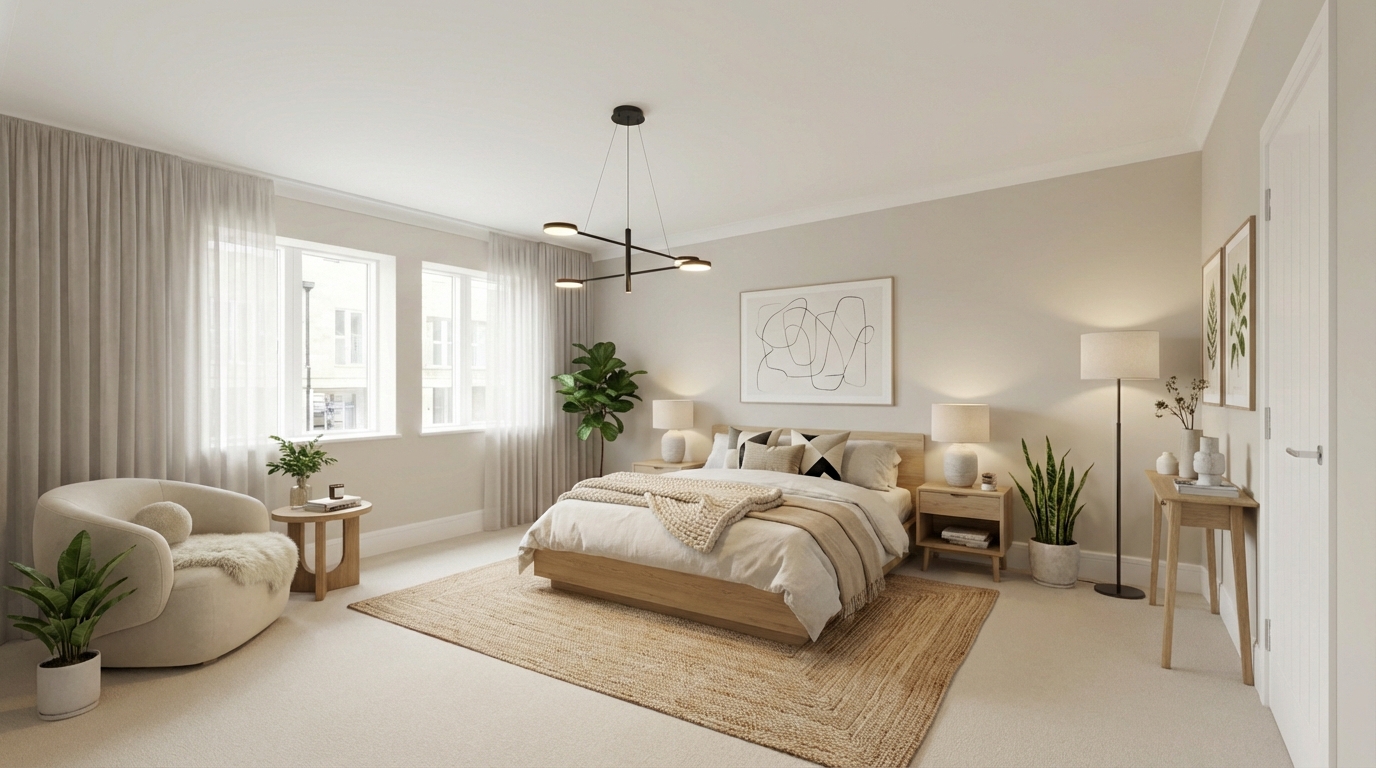
We built an AI-powered interior design tool that lets prospective retirement village owners visualise their future apartment — generating 1,248 photorealistic room images at a fraction of the cost of traditional photography.
The challenge
Audley Villages, the UK’s leading luxury retirement living brand, had a vision for 2026: Audley Bespoke, a new interior design service to enable a new owner to personalise their interior design before they even move in.
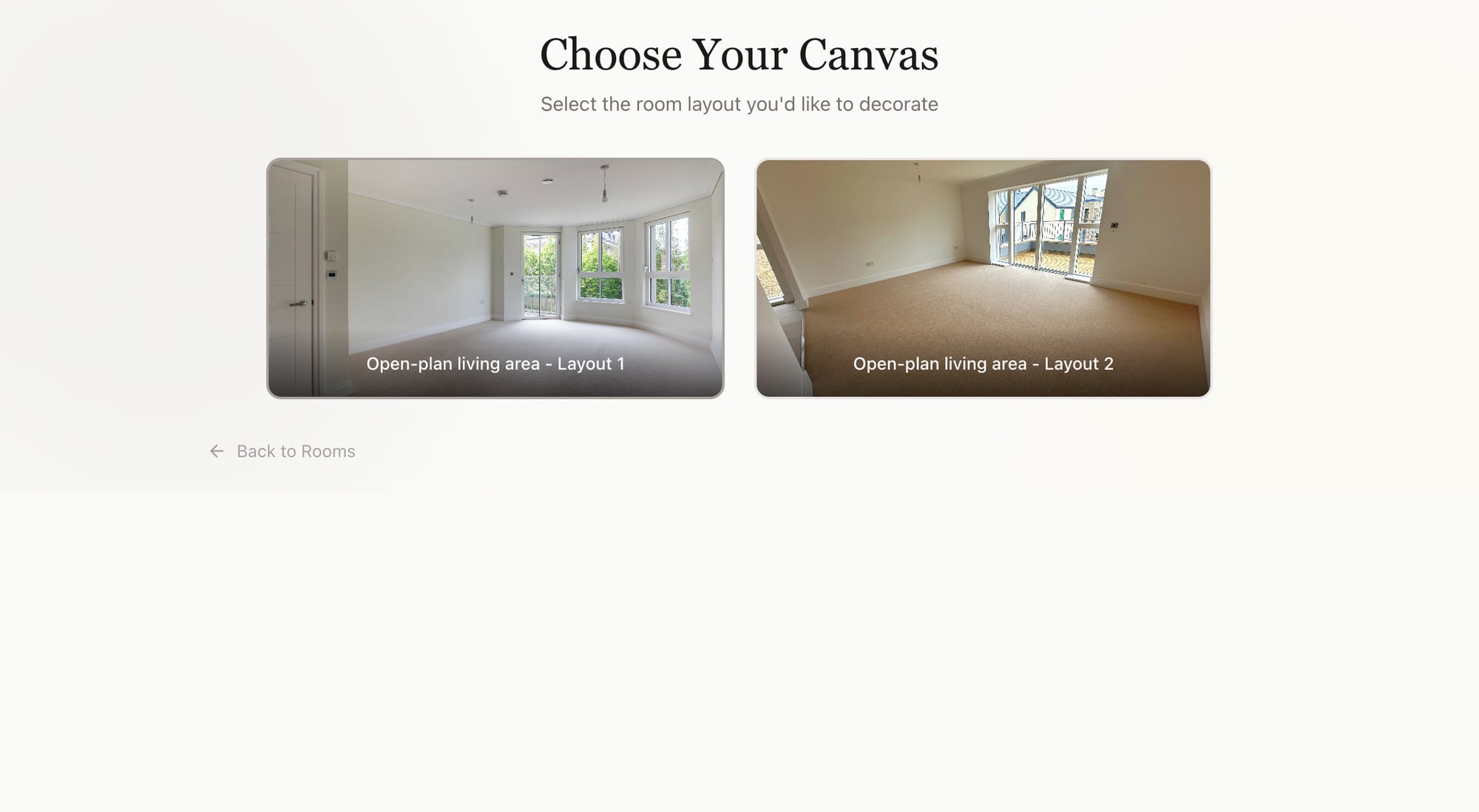
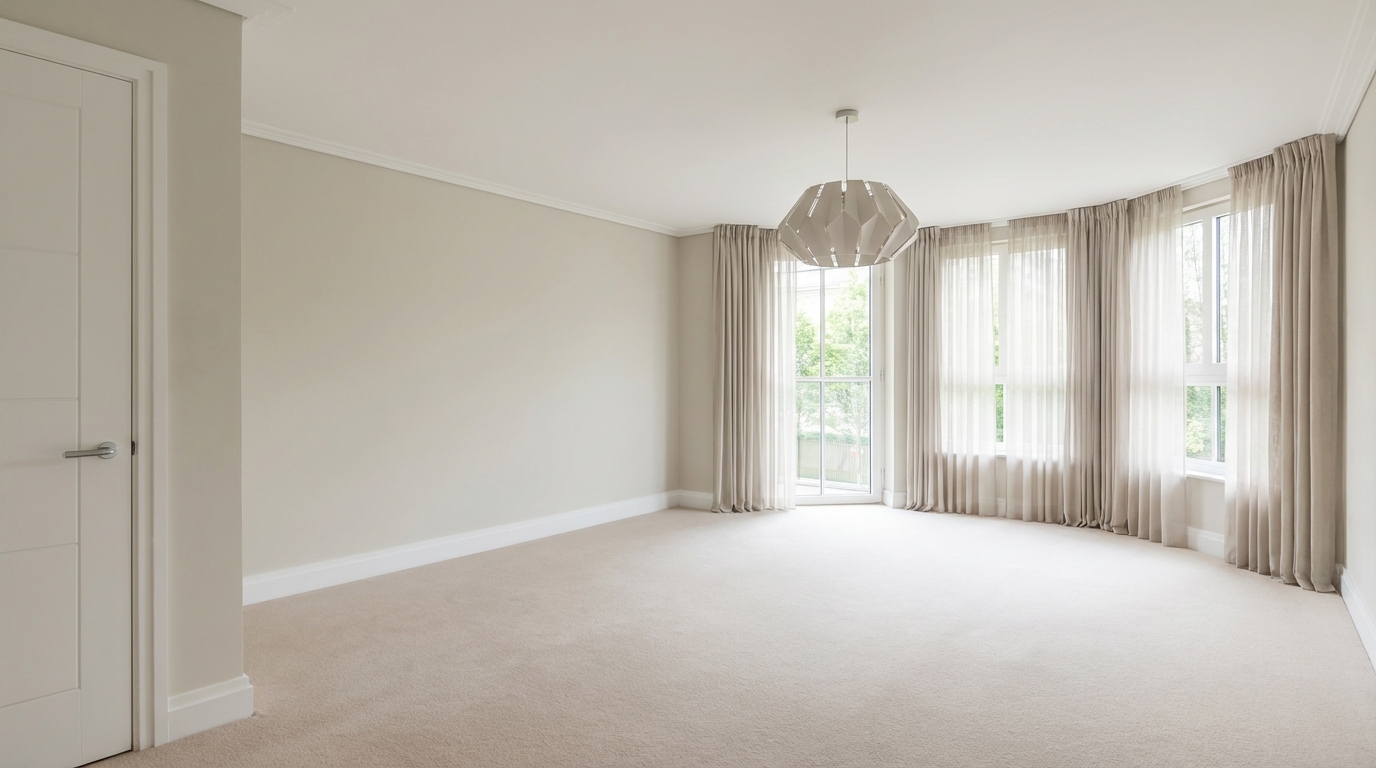
Until now, every Audley property has been delivered as a blank canvas to make your own once you move in. White walls, cream carpet, empty rooms. For prospective owners making one of the biggest decisions of their later life, imagining what their new home could look like was a leap of faith. Show apartments helped, but they only showed one vision. Printed mood boards offered options, but they felt flat and impersonal.
The growing number of people researching online before visiting faced an even bigger gap. They could see floor plans and empty room photographs, but there was nothing to bridge the distance between “bare magnolia walls” and “this feels like home.”
When Audley approached us about the campaign, we suggested using AI to generate the visualisations. It would let every prospective owner see their style, their colours, their taste. Instantly.
The new homeowner can then work with the Audley team to decorate their new home, exactly to their personal taste – from paint colours and window dressings, to light fittings and scatter cushions.
Our approach
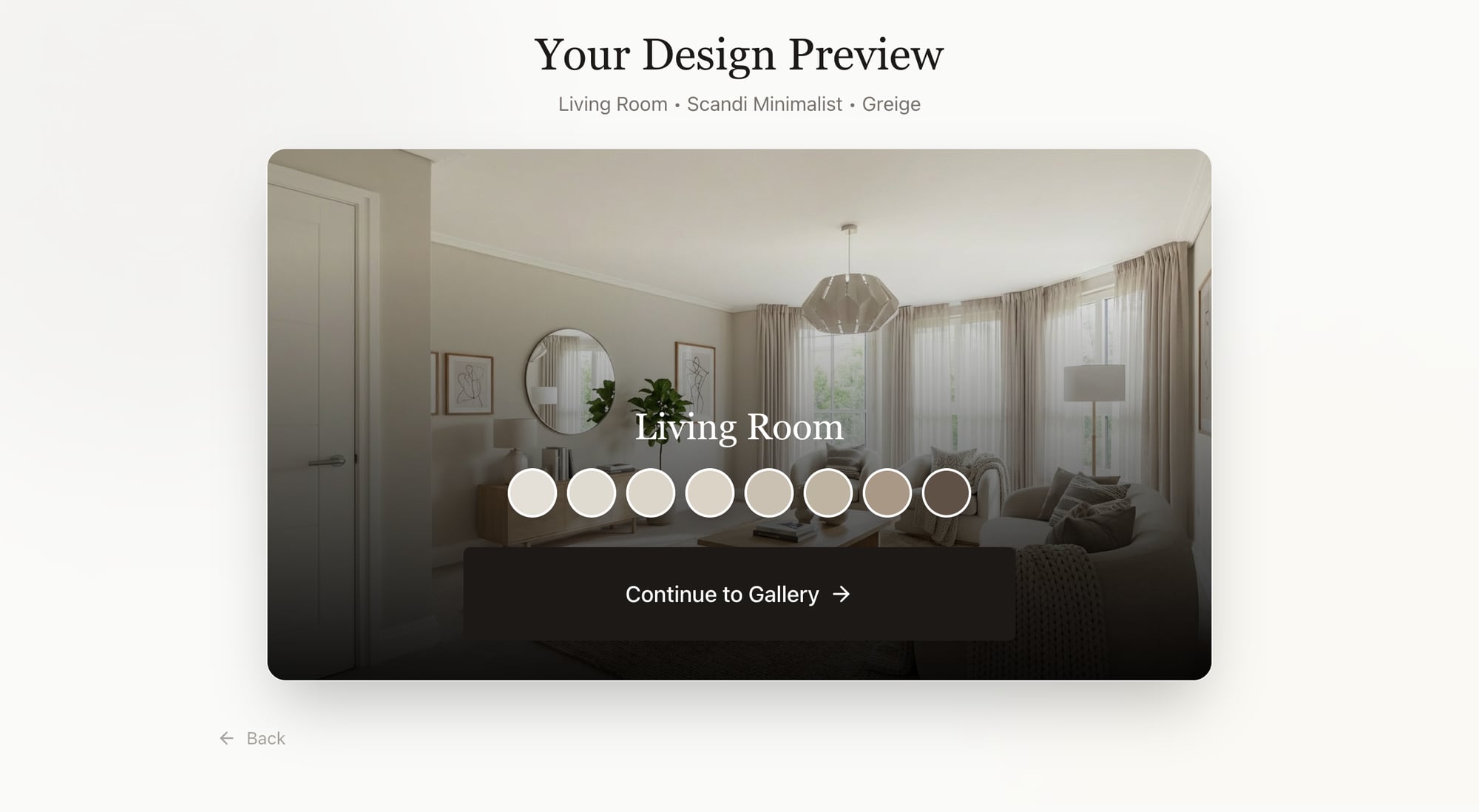
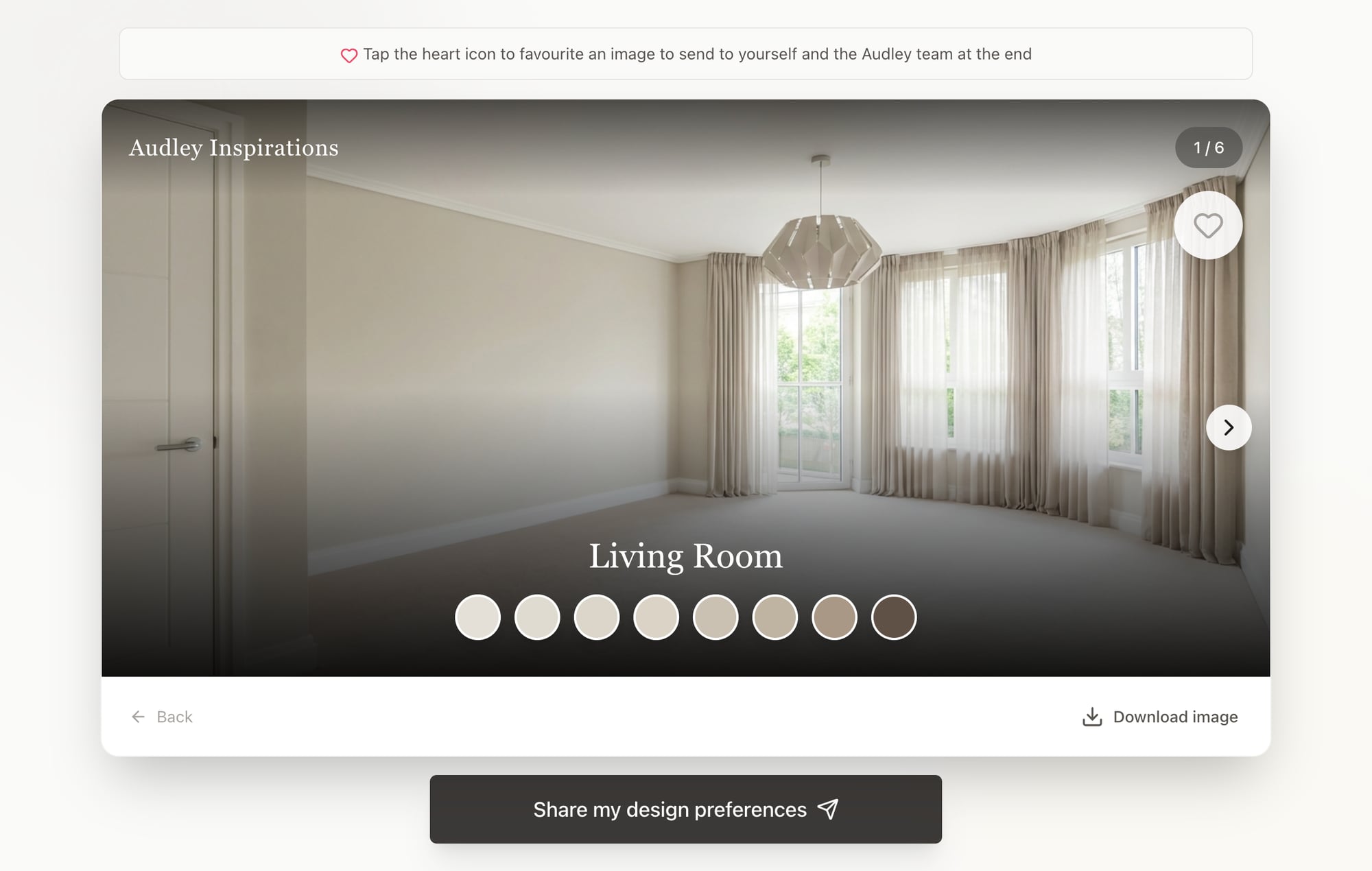
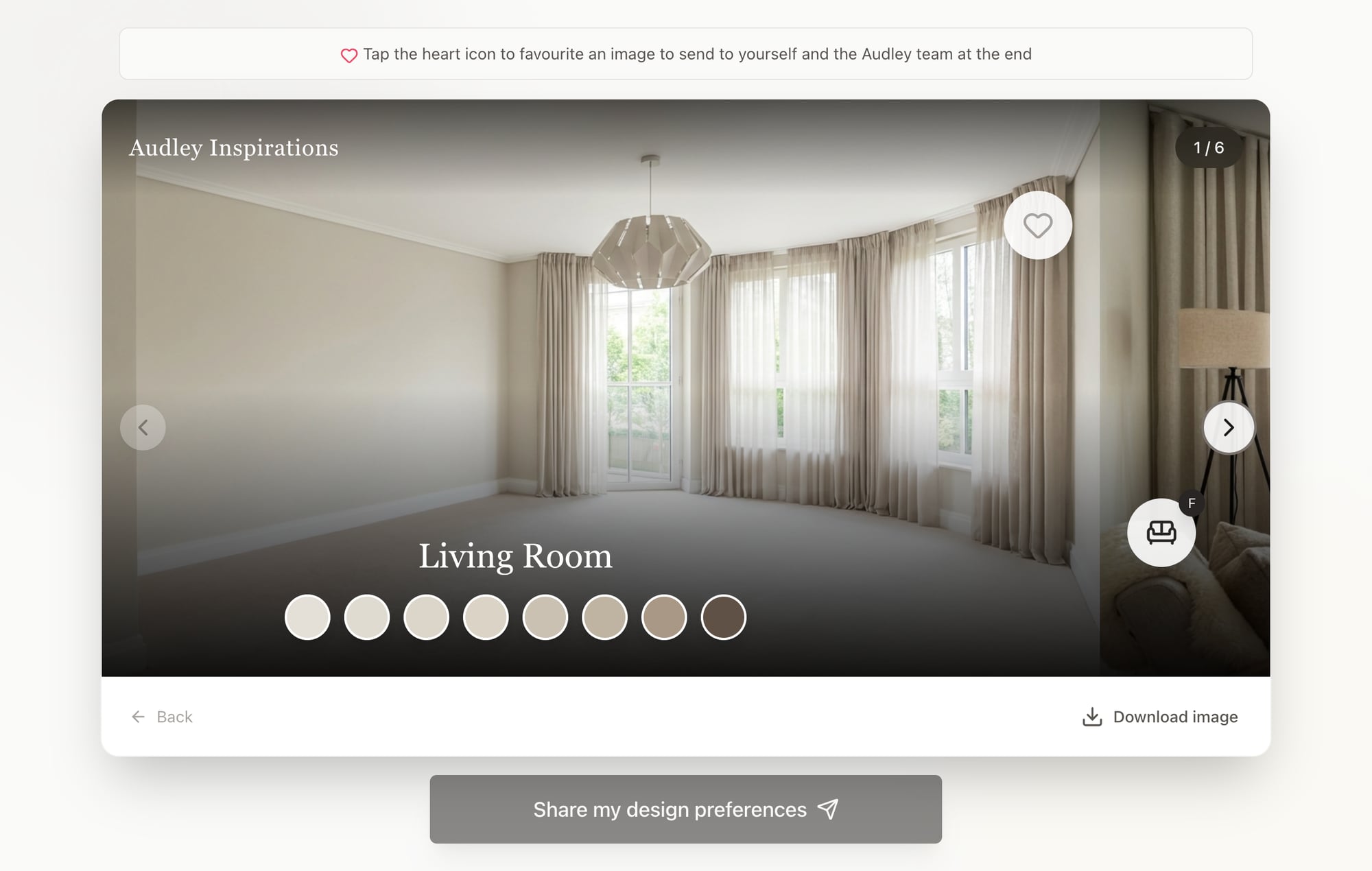
We built the Audley Bespoke Inspiration Creator: an interactive tool that lets users design their dream apartment and see it brought to life with AI-generated photorealistic visualisations.
The concept sounds simple. In practice, it required solving three distinct challenges:
The experience challenge: How do you guide someone through multiple choices (room, layout, furniture style, colour palette) without overwhelming them? Especially when your audience spans their 60s to 80s and expects something premium, not clinical.
The AI challenge: How do you generate over 1,200 photorealistic room images that look consistent, believable, and true to actual apartments, rather than the idealised spaces AI models tend to create?
The integration challenge: How do you turn design exploration into captured leads that feed directly into a sales pipeline, all while embedding seamlessly within an existing Drupal website?
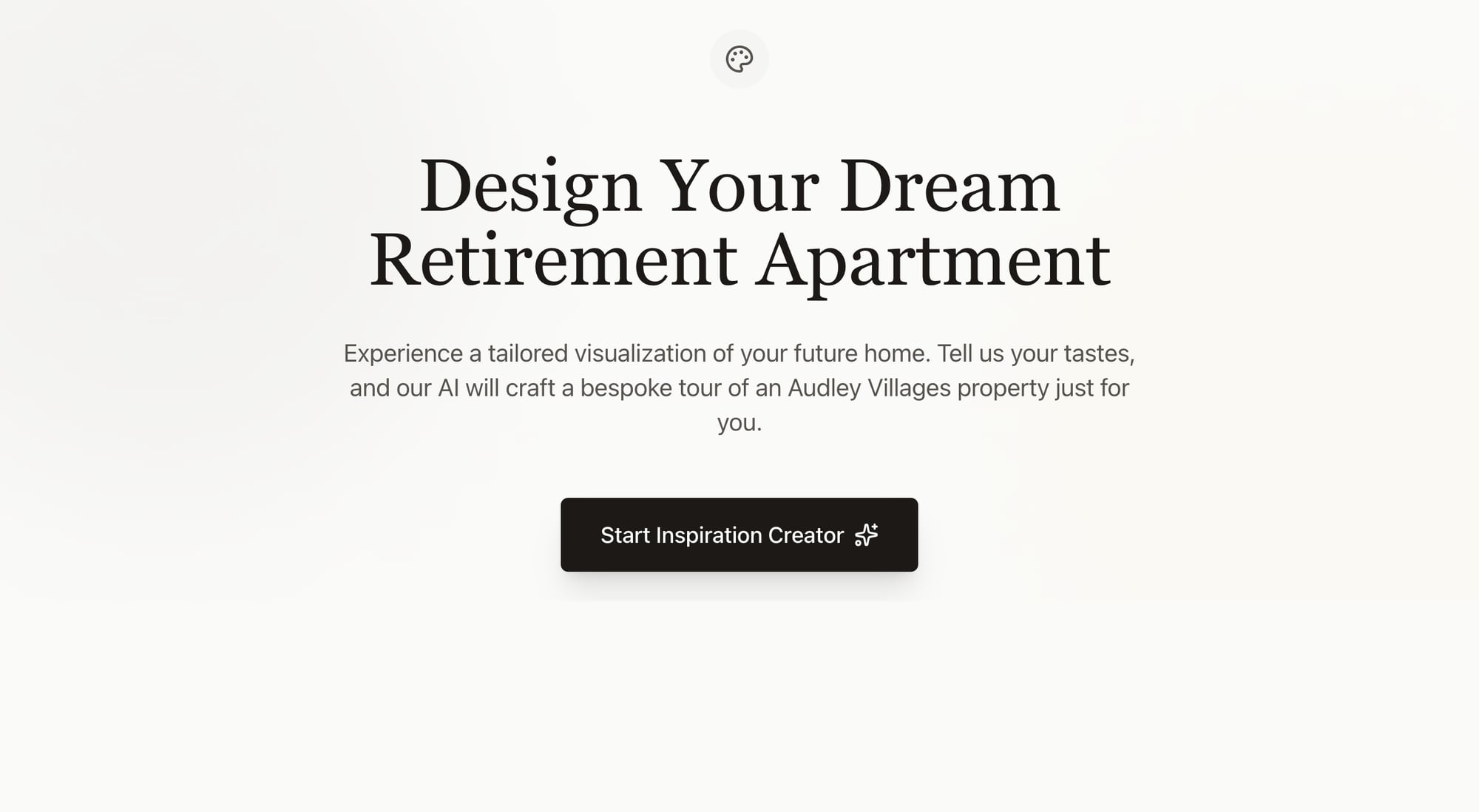
Discovery: understanding what actually matters
Our discovery phase focused on what mattered most to Audley’s audience. The insights shaped everything that followed.
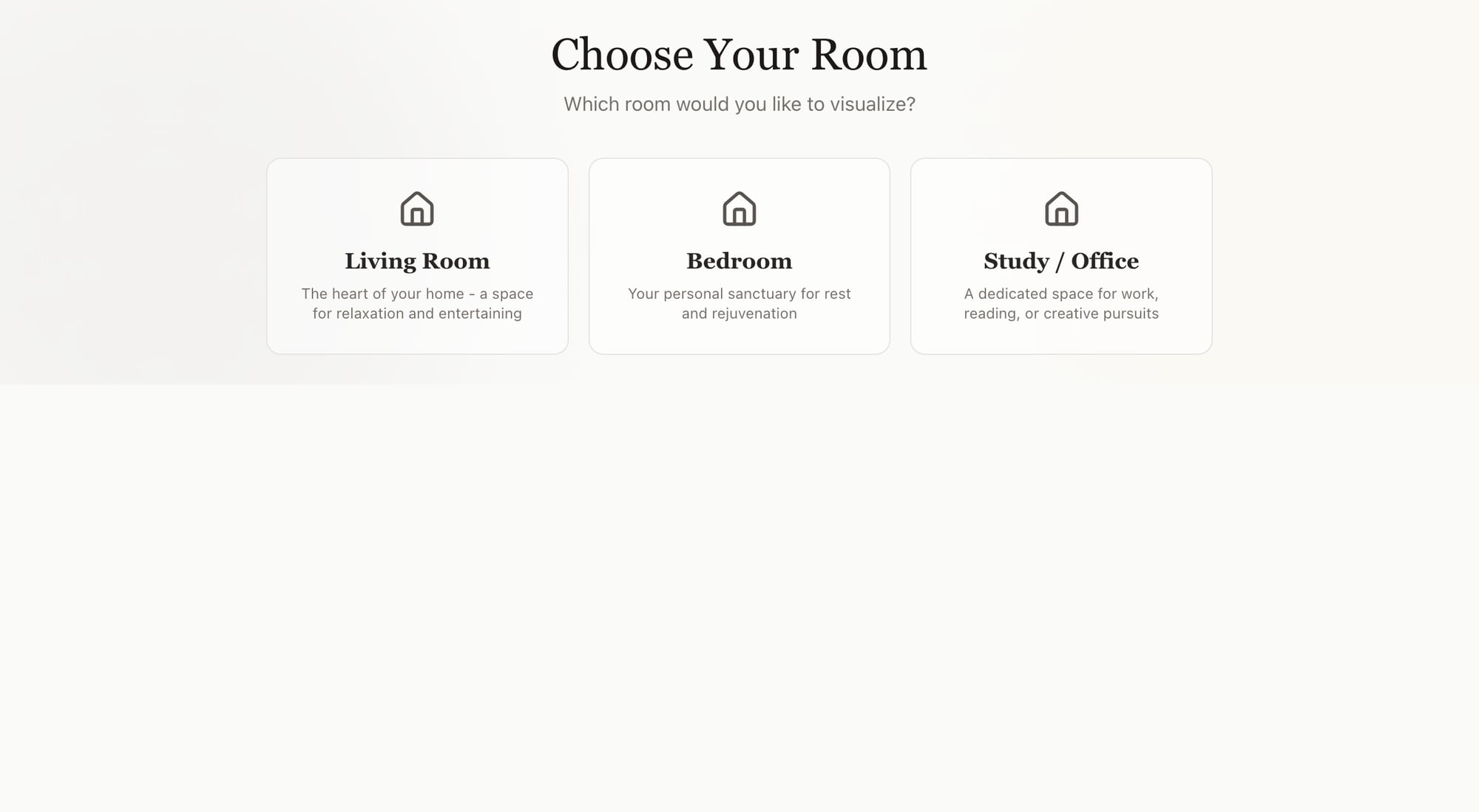
Room selection matters. Different owners care about different rooms. Some want to see the living room first; others prioritise the bedroom or study. The tool needed to let users start where their interest lies.
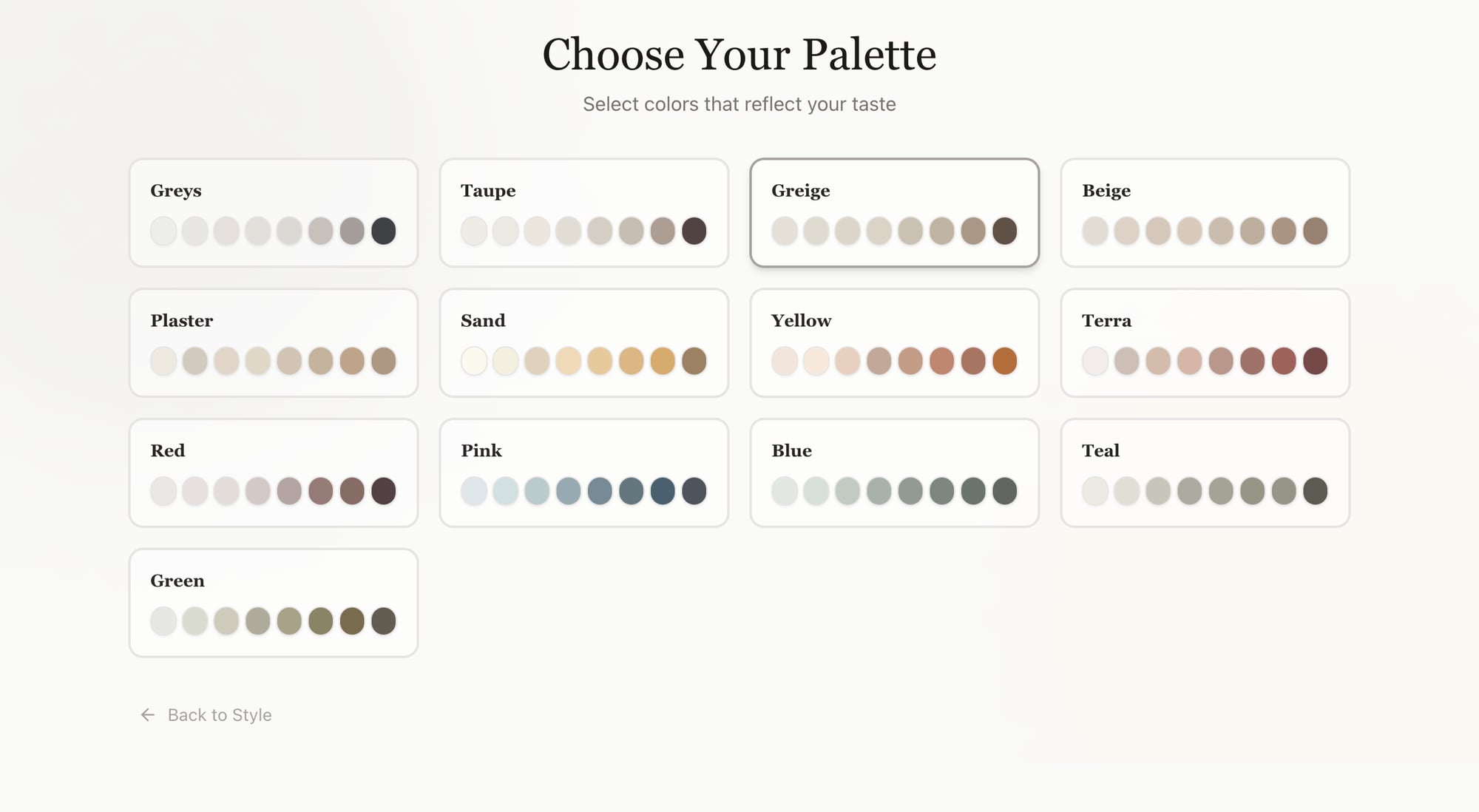
Colour is deeply personal. Rather than offering named “themes,” we used visual colour swatches based on Coat paint palettes. The 13 palettes were carefully curated to reflect the natural, muted tones that appeal to Audley’s demographic.
Furnished vs. unfurnished. Early testing revealed people wanted to see both: the painted-but-empty room and the fully furnished version. This led to a toggle that lets users flip between views.
The AI challenge: getting machines to respect reality
The most technically demanding aspect of the project was prompt engineering: getting AI-generated images to look right while respecting the constraints of real apartments.
Here’s the thing about generative AI: it has strong opinions about interior design, and they don’t always match reality.
- Floor replacement. The AI consistently wanted to replace cream carpet with hardwood or parquet flooring.
- Ceiling embellishment. AI models love coving, cornices, crown moulding, and ceiling roses — none of which exist in actual Audley apartments.
- Wall patterns. Without explicit instruction, the AI added stripes, geometric patterns, and decorative paint techniques.
- Furniture blocking doors. The AI would place sofas in front of doors, making rooms impractical for actual living.
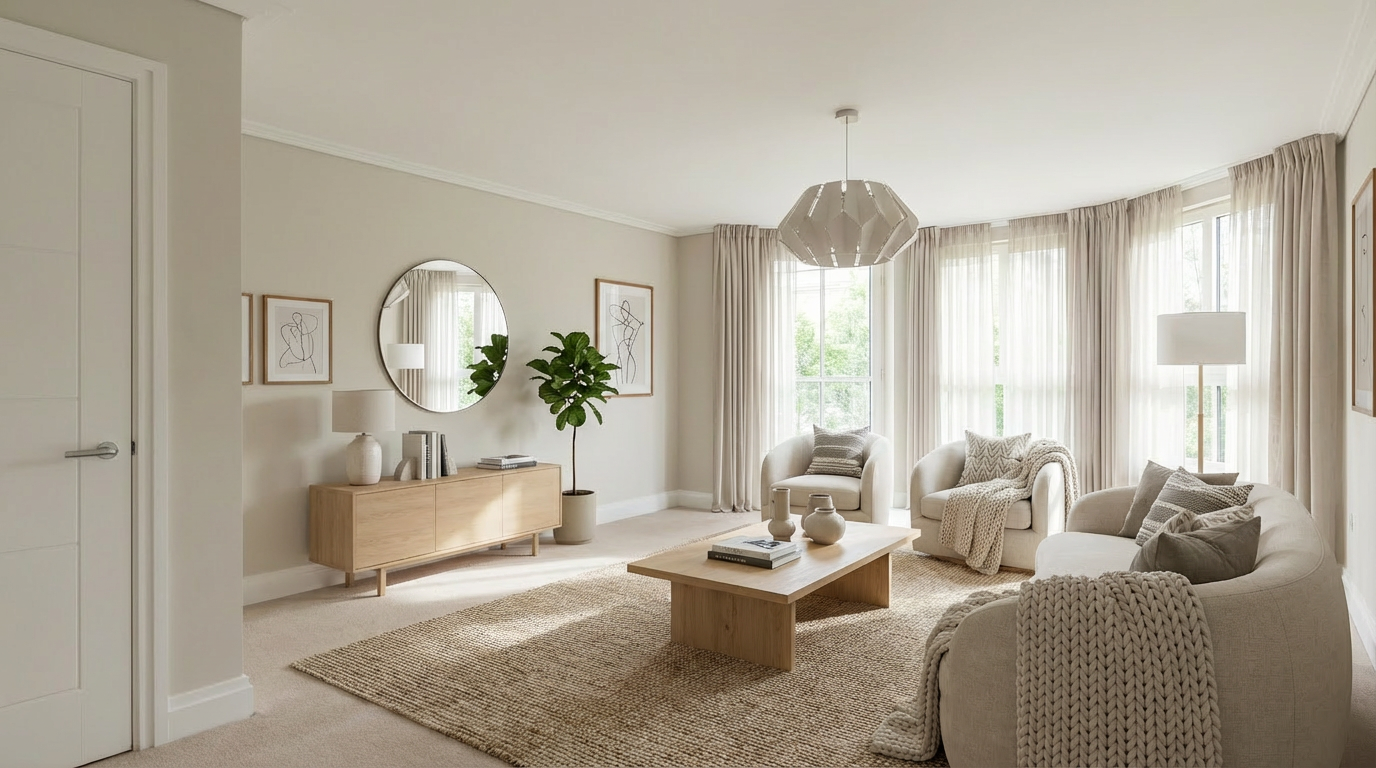
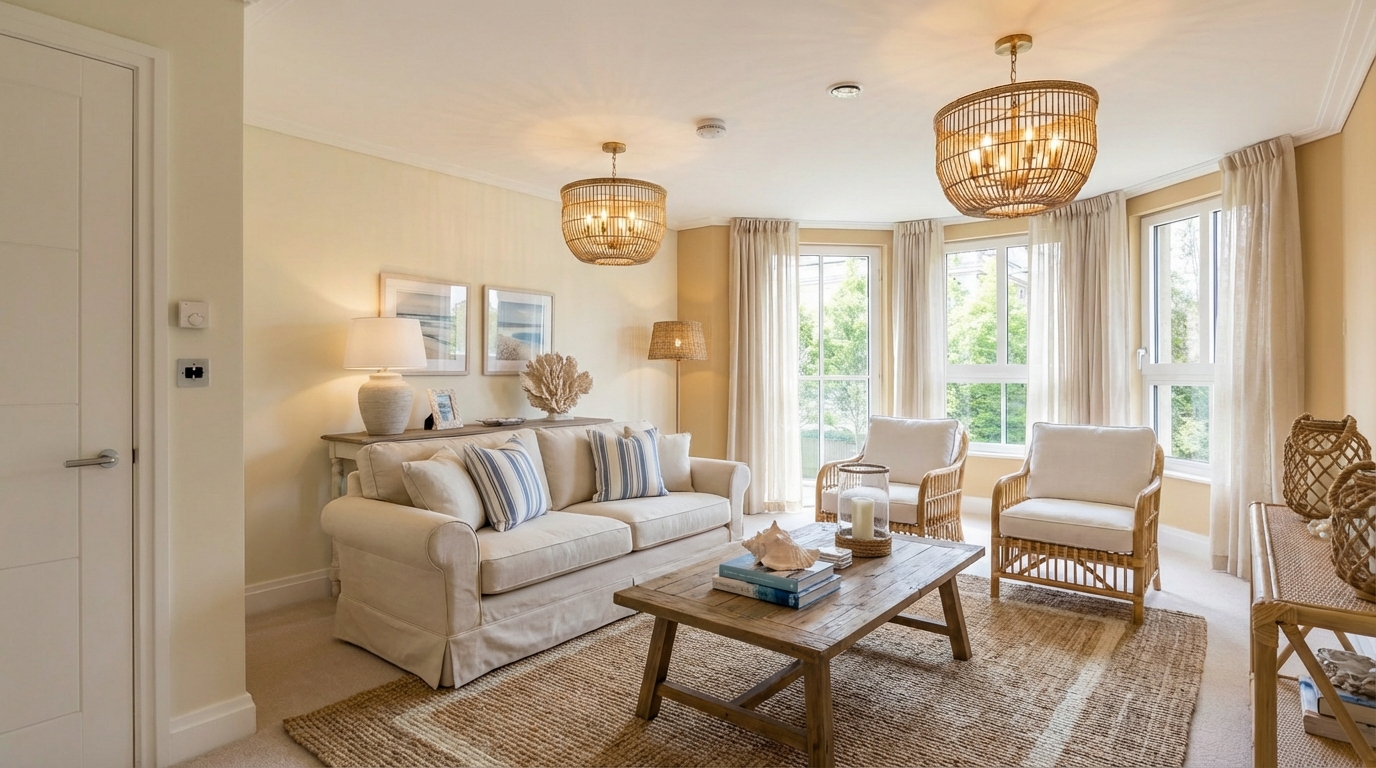
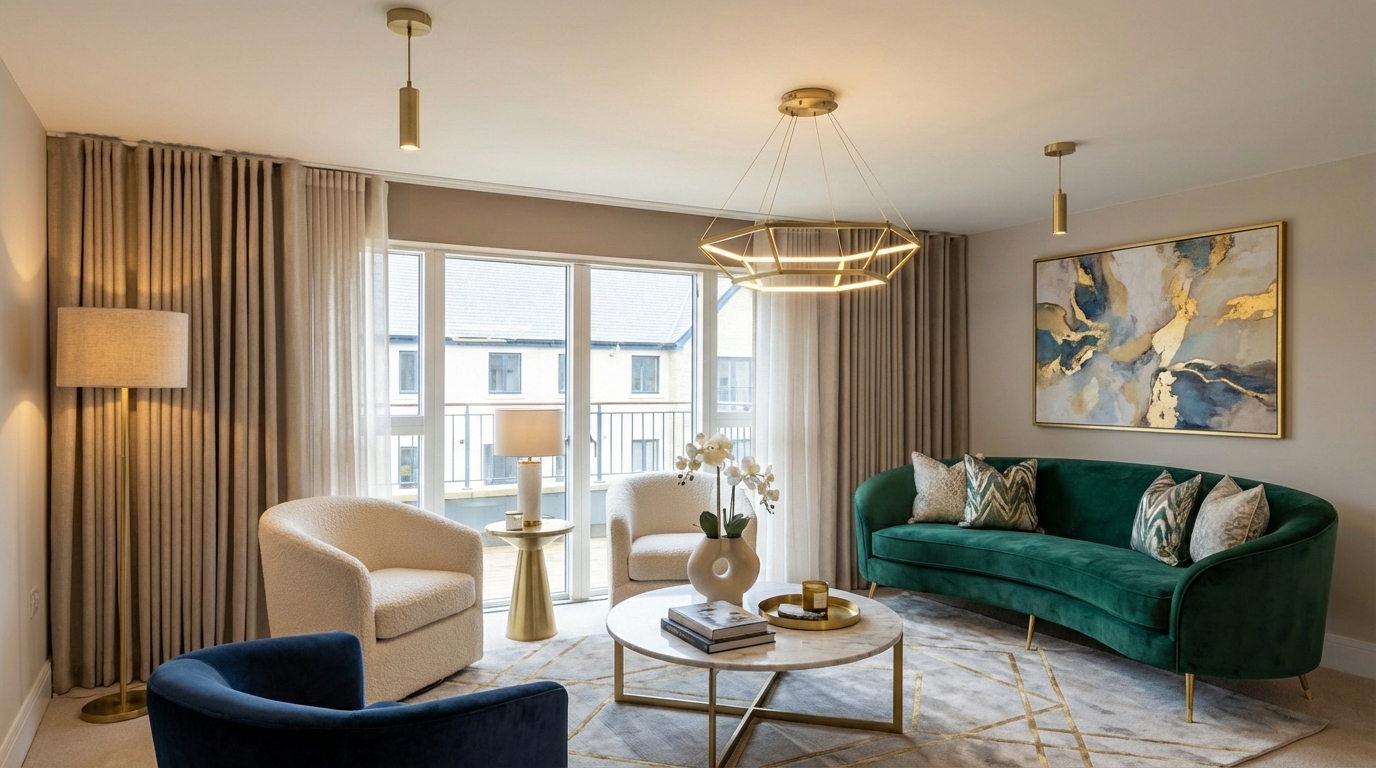
We developed a two-step generation process. First, an “unfurnished” variant: the empty room with painted walls and curtains. Then, the furnished variant using the unfurnished image as its base. This ensures colour consistency and gives the AI a stable foundation.
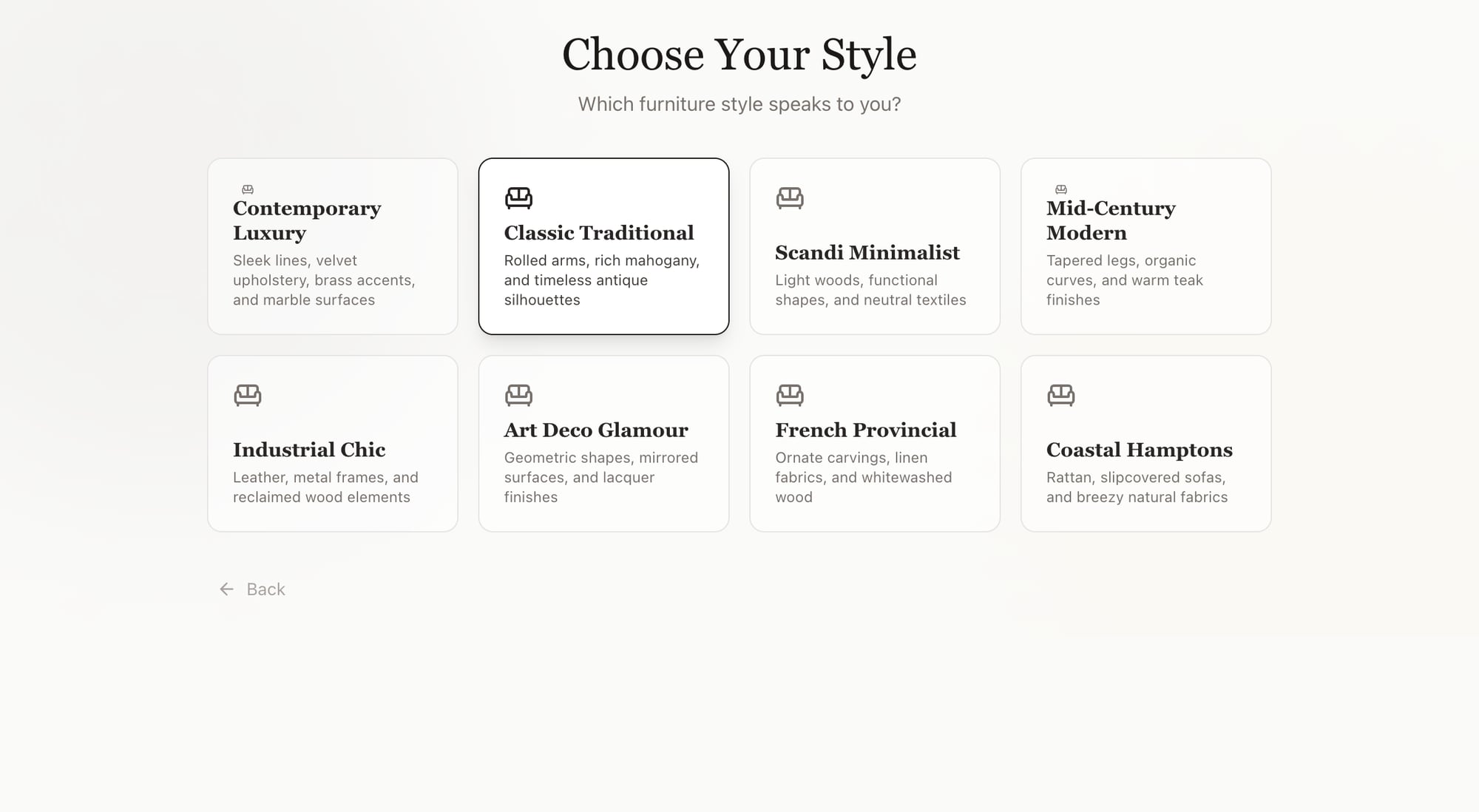
The result: 1,248 unique room visualisations across 6 room layouts, 8 furniture styles, and 13 colour palettes, each in furnished and unfurnished variants.
The business case: AI vs traditional photography
For 1,248 unique room visualisations across 624 distinct style/palette combinations, a conventional photography approach would need:
The AI approach required approximately 50 hours of prompt engineering, multiple regeneration cycles, and API generation costs. That delivered the same 1,248 images in weeks rather than years, at a fraction of the cost.
Building for the audience
Design decisions were guided by Audley’s brand positioning: elegant, welcoming, reassuring, premium.
- Progressive disclosure. One choice at a time, with clear visual hierarchy
- Favouriting and download. Users can heart favourite images and download designs for offline reference
- Browser history integration. The back button works naturally throughout
- State persistence. Progress saves to localStorage, so users can return without starting over
- Accessible throughout. Proper ARIA labels, keyboard navigation, focus management, and semantic HTML
The results
“We wanted something different for Audley Bespoke – a tool that helps customers truly visualise the possibilities before working with our team to design their new living spaces. The concept is brilliant, and Versantus brought real innovation to the project. They’re not afraid to push boundaries with new technology, which is exactly what we need to stay at the forefront of retirement living.
The AI bloopers along the way kept us entertained (proof that great tech still needs great human prompting), but the final result is fantastic. Our senior leadership team loved it from the start.
Having a digital partner who’s always exploring smarter ways to deliver an exceptional user experience is invaluable. Kudos to Versantus.”
— Samantha Happe, Digital Marketing Manager, Audley Villages