What it is The day What teams built Photos Feedback Book your hack day

AI hack days

One day. Your team.
Working software by three o’clock.

A facilitated day where your people learn how AI actually works, then use it to build real tools for your own business. No coding experience needed, and nothing they build is a mockup.

Run for teams at
  • Meech International
  • Primeast
  • Audley Villages
  • Guides for Brides
  • Patient Choice
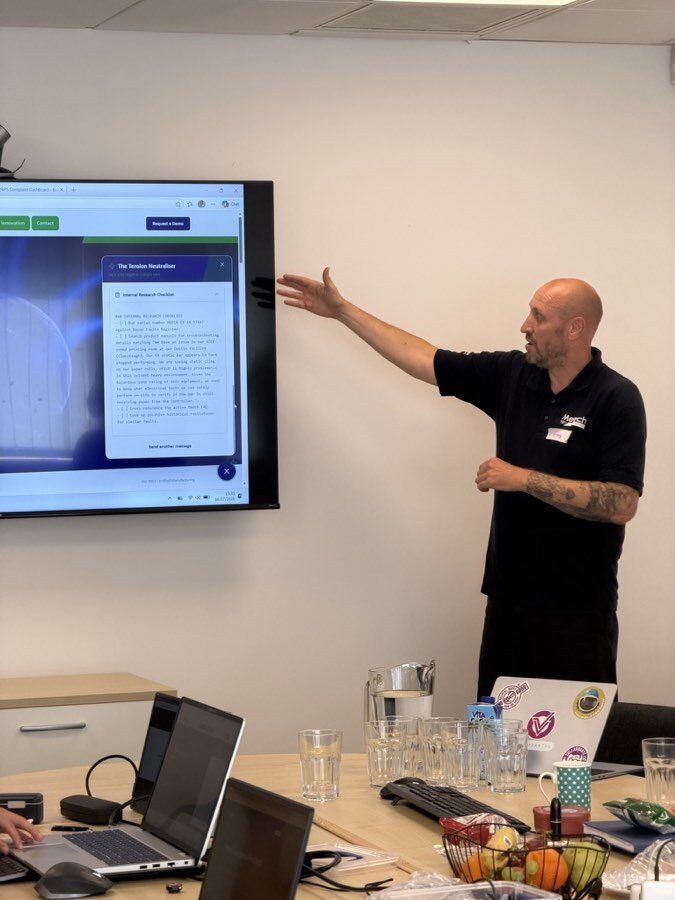
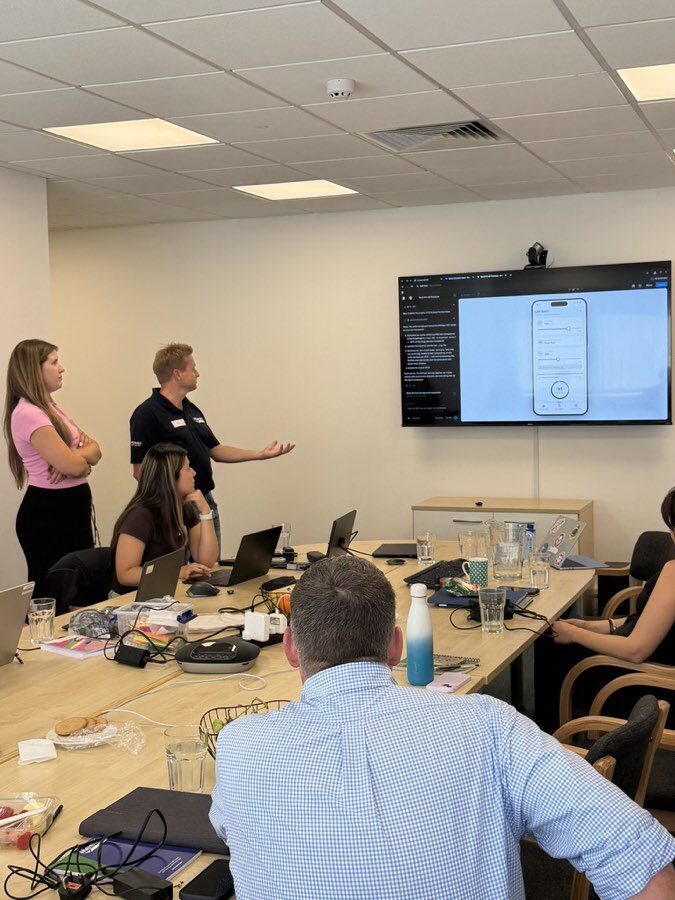
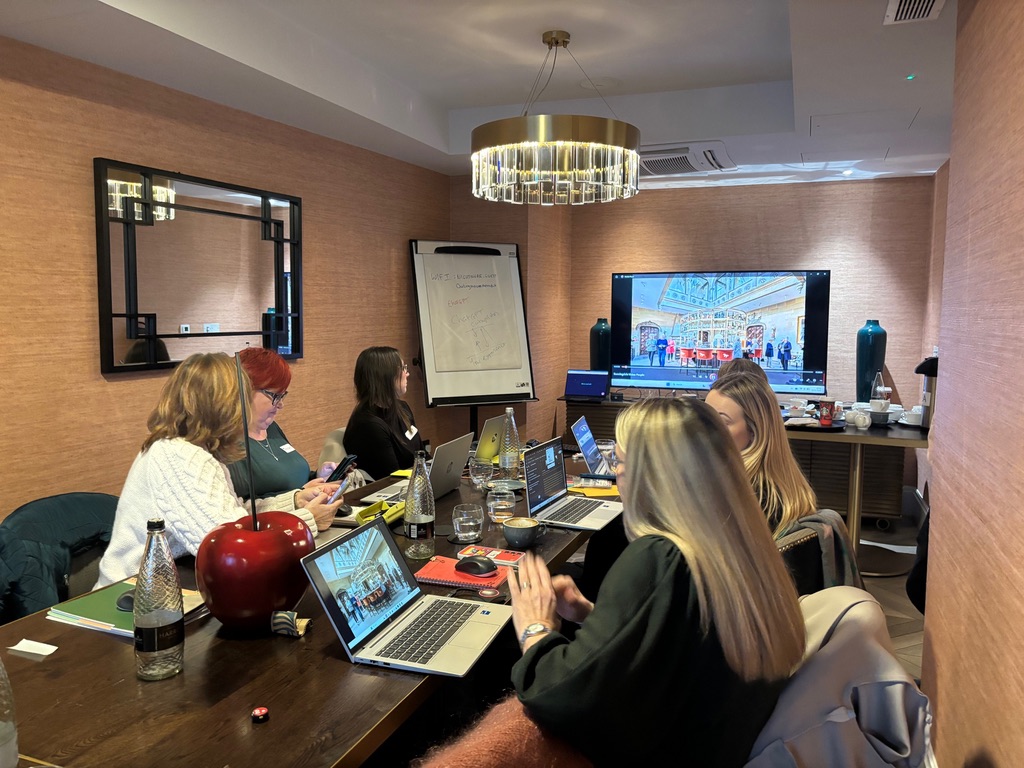
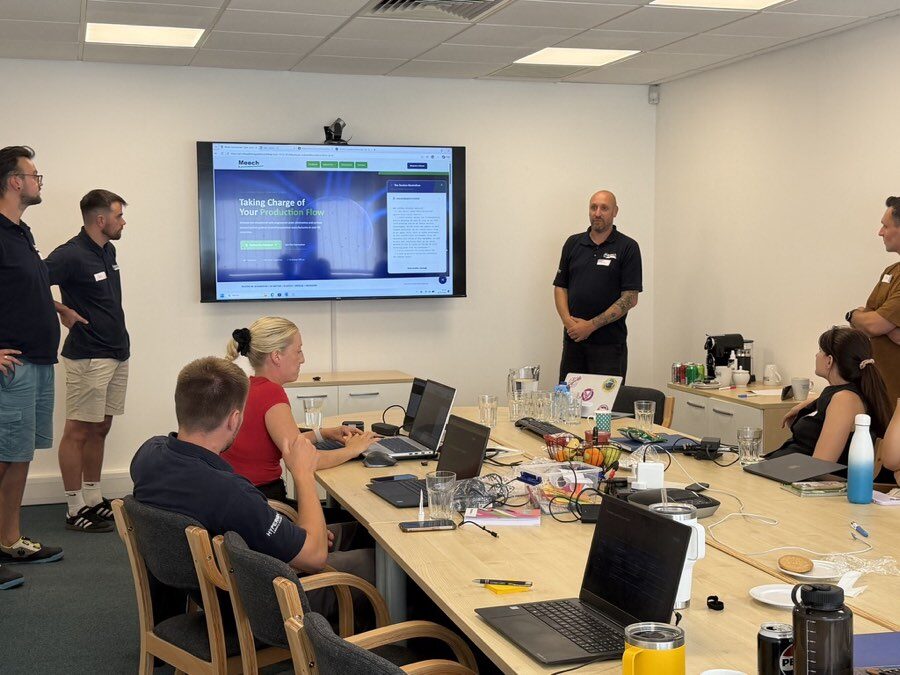
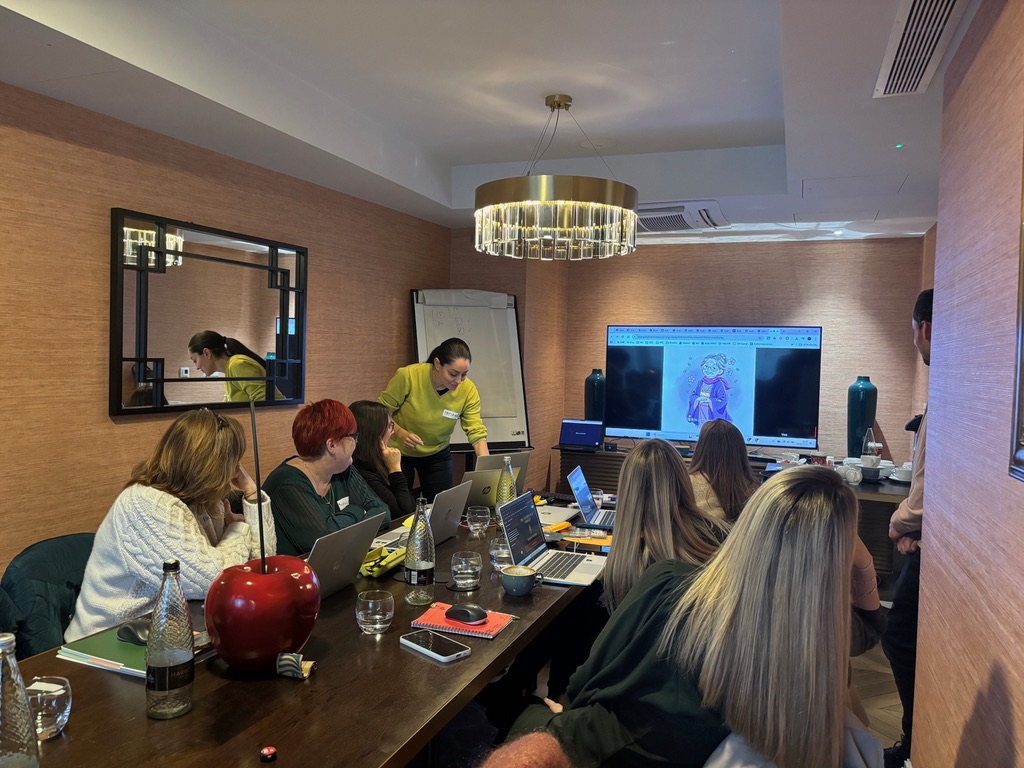
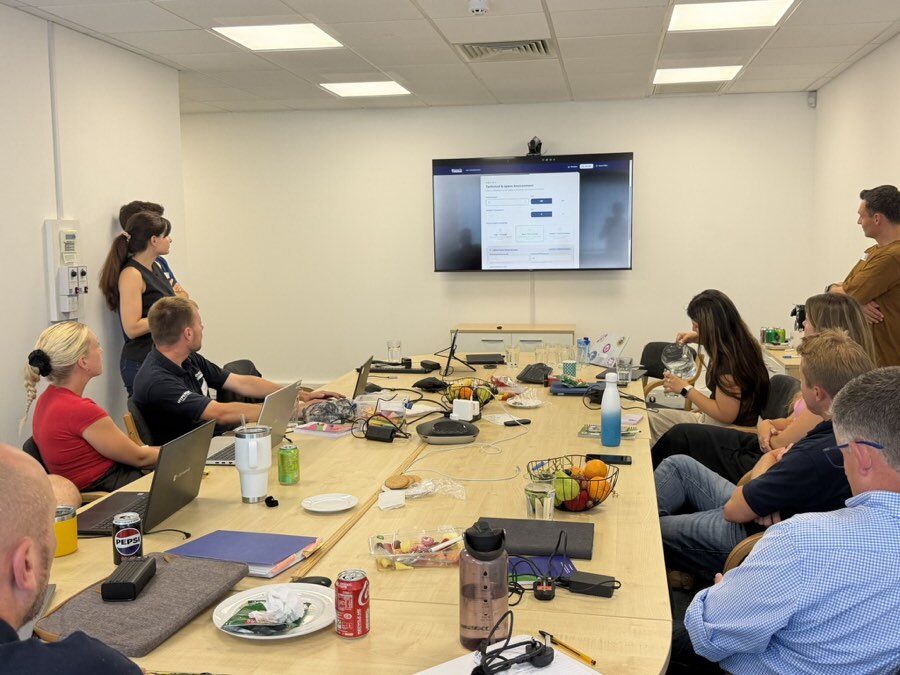
The Meech International team watching a demo during their AI hack day in Witney
7 hours
From first coffee to a live demo of something that works
3 teams
Building at once, so you leave with options, not one idea
Zero code
Written by hand. No experience needed to take part
9 / 10
Average score participants gave the most recent hack day

What it is

A day of learning that ends with something real

Most AI training stops at the demo. We spend the morning showing your team how these tools work, then hand them a challenge from their own business and help them build it. By mid-afternoon, everyone is presenting something that runs.

01

Learn by doing

We open with a plain introduction to AI: automation, machine learning, large language models, agents and how to write a prompt that works. Then everyone puts it straight to use.

02

Your problems, not ours

Before the day we survey your team and agree a mission brief drawn from their own frustrations. No sample data and no abstract exercises.

03

Prototypes, not slides

Teams plan with Gemini, build in Bolt and generate their own images and video as they go. What they demo at three o’clock is running software with a name and a pitch.

04

Everyone contributes

Teams of three or four share out the planning, design, testing and pitching. There is no single coder in the room, and nobody needs to be one.

The shape of the day

Learn in the morning, build all day, demo by three

These are the timings from a typical day. We move them around to suit your team, your building and your diary.

Morning: learn and start building

09:00

Arrive and set up

Coffee, introductions, and getting everyone logged into the tools.

09:30

What is AI?

A practical tour of automation, language models, agents and prompting, with live demos rather than theory.

10:15

Teams and mission brief

We split the room into small teams and hand out the challenge.

10:30

Warm-up build

A short guided build to get everyone comfortable with the tools, and to show why a precise brief beats a vague one.

10:50

The main mission starts

Whiteboards and post-its first, prompts second. Planning offline earns points.

Afternoon: polish and present

12:30

Lunch

Usually eaten at the laptop, whatever we say.

13:00

Improve and expand

Teams sharpen the interface, add the feature they wanted, and get their pitch ready.

15:00

Show and tell

Forty-five minutes of demos. Points for working software, a creative twist, good design, and showing your process.

15:45

What next

What did we learn, what surprised us, and where would this help most tomorrow morning.

16:00

Finish

Prizes handed out, projects saved, and the room usually still talking.

What teams built

Real briefs, real products

Every hack day is built around a challenge the client brought us. Here is what came out of the last four.

Meech International

Turning product knowledge into a triage tool

Witney, Oxfordshire · 16 July 2026 · ten people, three teams

Meech make static control and air technology for production lines, sold through distributors and overseas offices. Their pre-day survey kept pointing at the same two things. Distributors and agents ring or email with questions that have already been answered somewhere, and the marketing team cannot film usable footage in dark, dusty factories.

So we set two briefs: build a tool that reads a customer’s issue, finds the answer in Meech’s own literature and hands a draft reply to a human. Or build a studio that generates accurate product images and video on demand.

  • The Tension Neutraliser A complaint triage dashboard with a proper static control pun for a name. Paste in a customer issue and four agent steps pull out the product, serial number, category, warranty status and risk level, ready for a person to check and reply. It arrived with its own marketing site and a Request a Demo button.
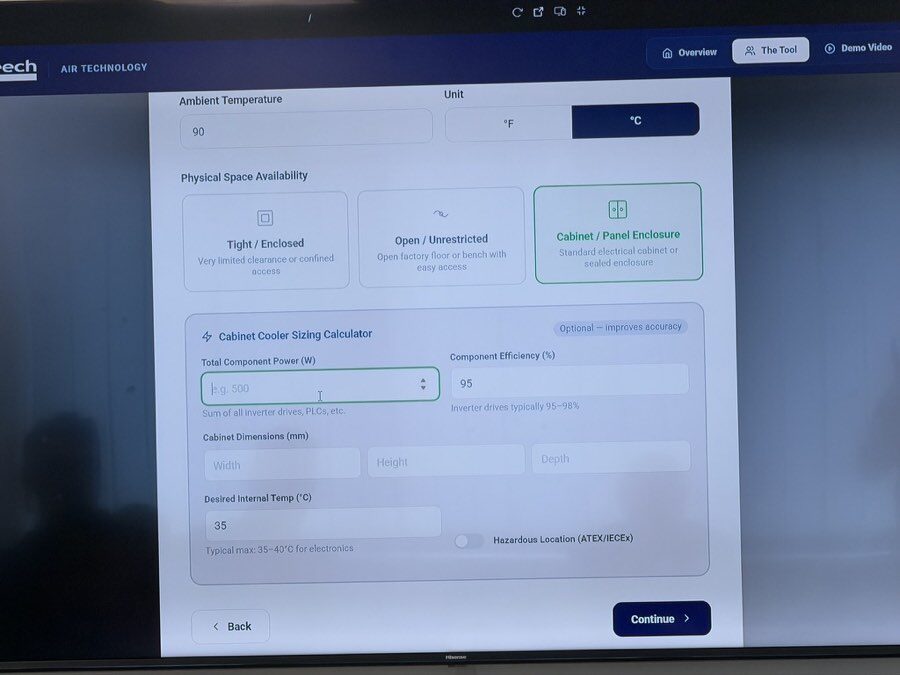
  • A cabinet cooler sizing calculator A self-serve tool that walks a customer through sizing a cabinet cooler, from ambient temperature and component power to cabinet dimensions and an ATEX/IECEx hazardous location toggle. It looked less like a hack and more like a page from meech.com.
  • A mobile-first prototype One team built for the phone instead of the desktop, with sliders and a live score dial, demoed straight from Bolt onto the big screen.

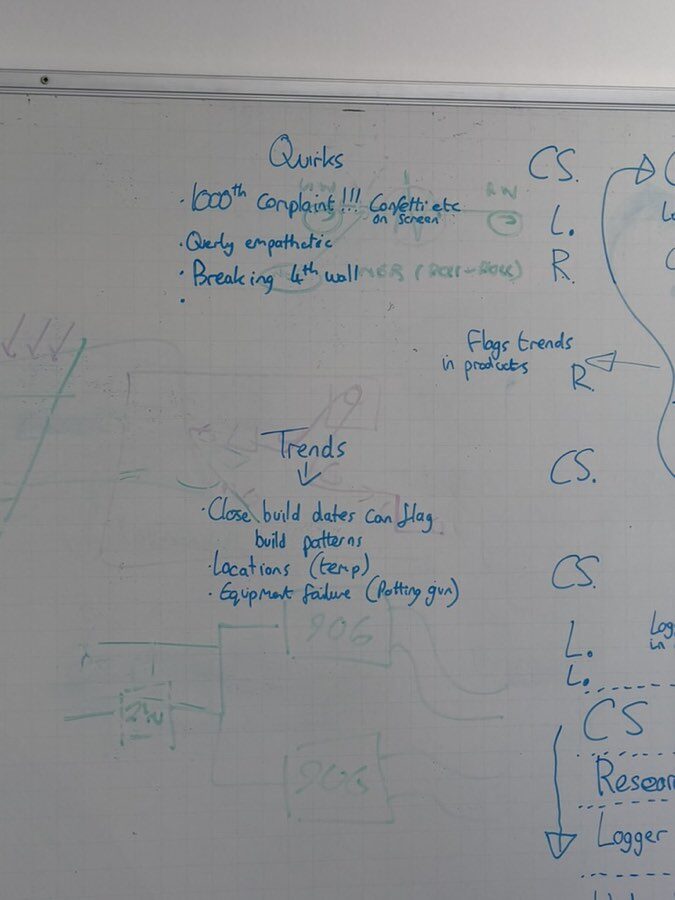
The best ideas started offline. One whiteboard set out the bot’s personality next to the serious work: confetti for the thousandth complaint, an overly empathetic mode, and a bot that occasionally breaks the fourth wall.

BoltGeminiGoogle VidsAgentsCustomer serviceProduct tooling

What happened next. All three teams are taking their projects further and presenting them to the Meech board in September. The marketing team used what they had learned to finish a product video that same week.
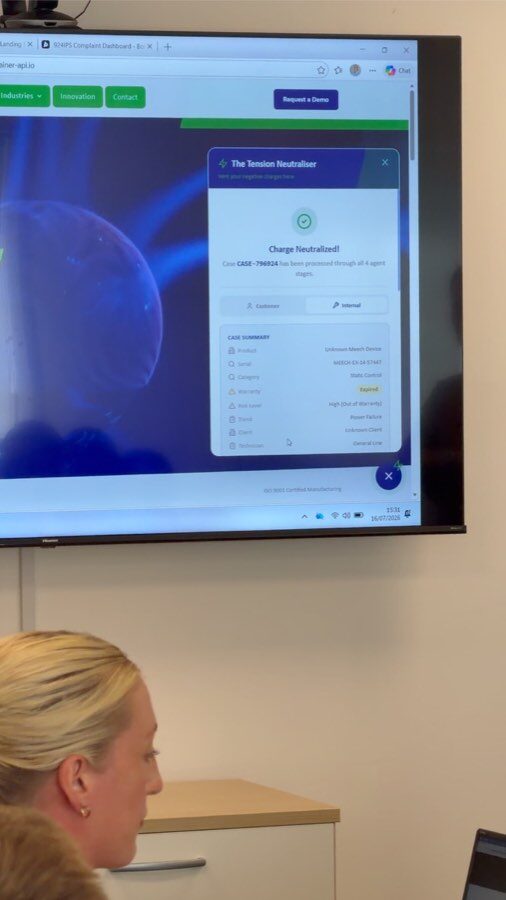
The Tension Neutraliser dashboard running on screen
“Charge neutralised”: the triage dashboard running
A Meech team presenting their prototype to colleagues
Show and tell, 15:30
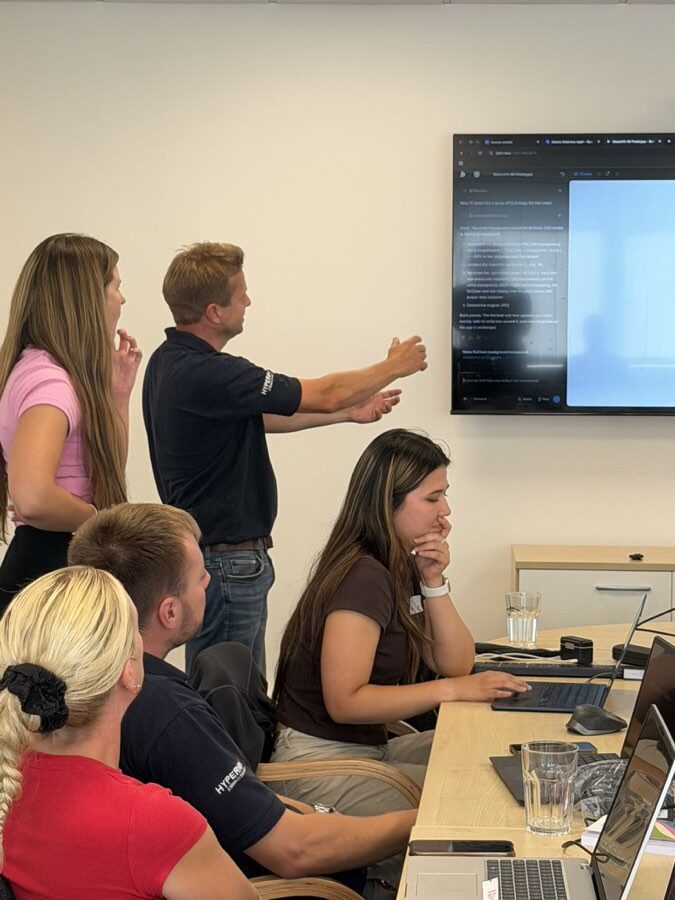
Walking the room through a triaged customer case
Walking through a triaged case, live
A mobile-first prototype demoed from Bolt
One team built for the phone instead
The cabinet cooler sizing calculator built during the day
The cabinet cooler sizing tool, built in an afternoon

Primeast

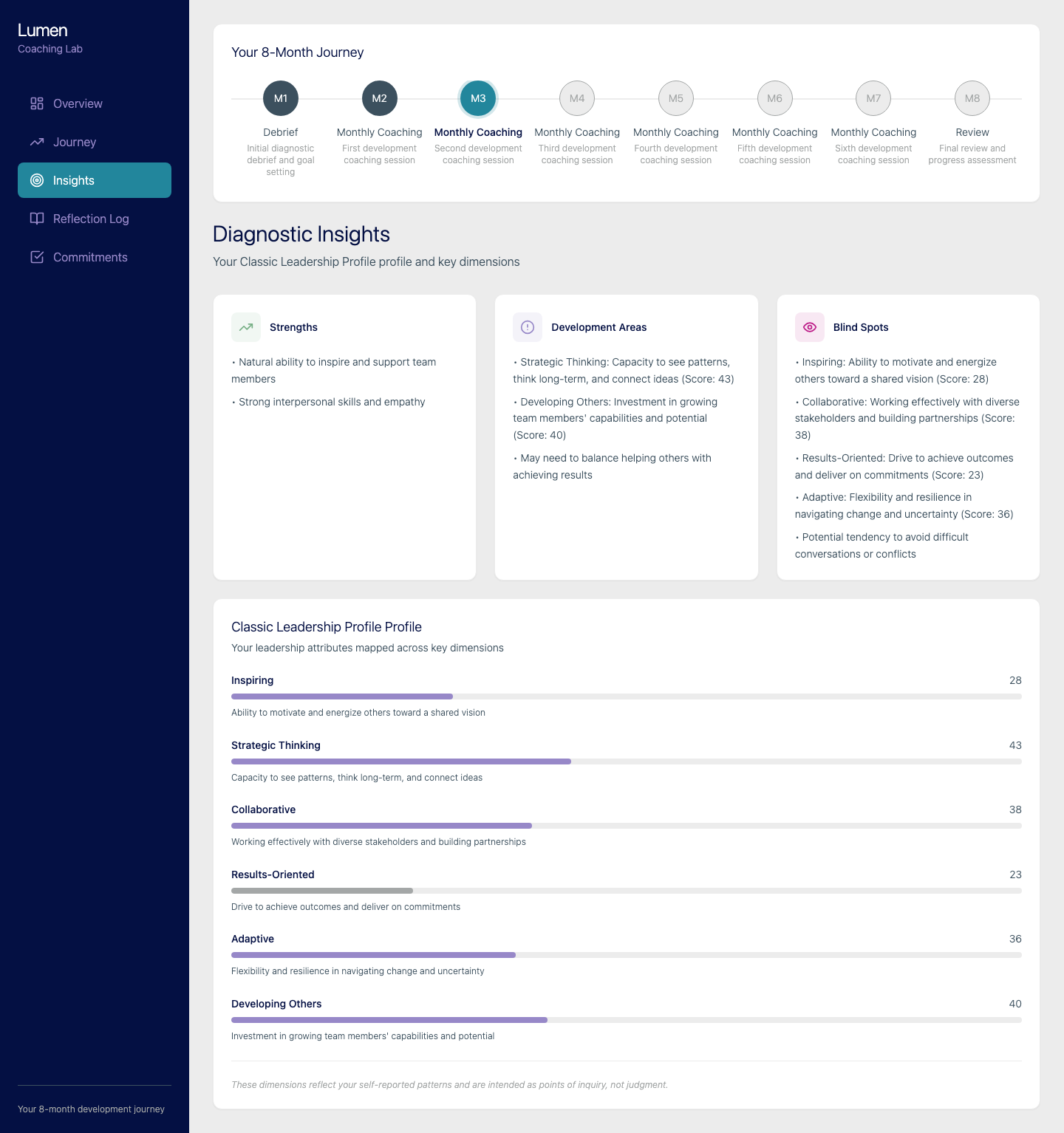
An AI coaching platform for an eight-month programme

Three teams · leadership development

Primeast run leadership coaching programmes built on diagnostic tools such as Insights Discovery and Leadership Circle 360. Two problems came up straight away. Coaches lose hours reading PDF reports before every session, and learners lose momentum the moment the coaching stops.

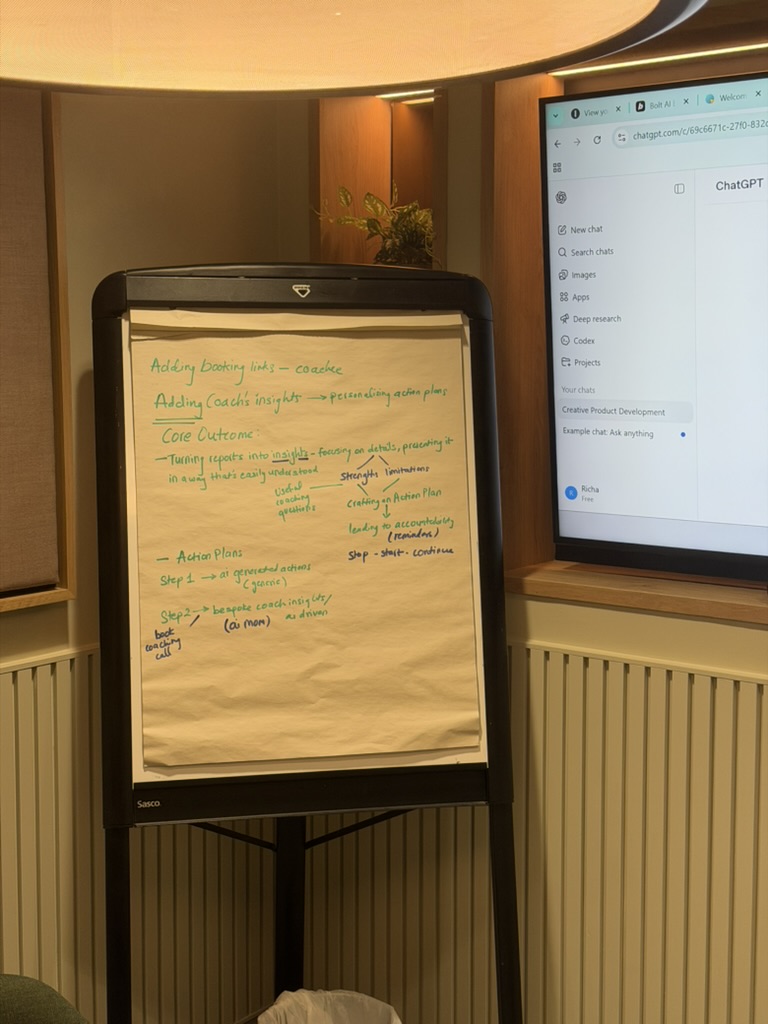
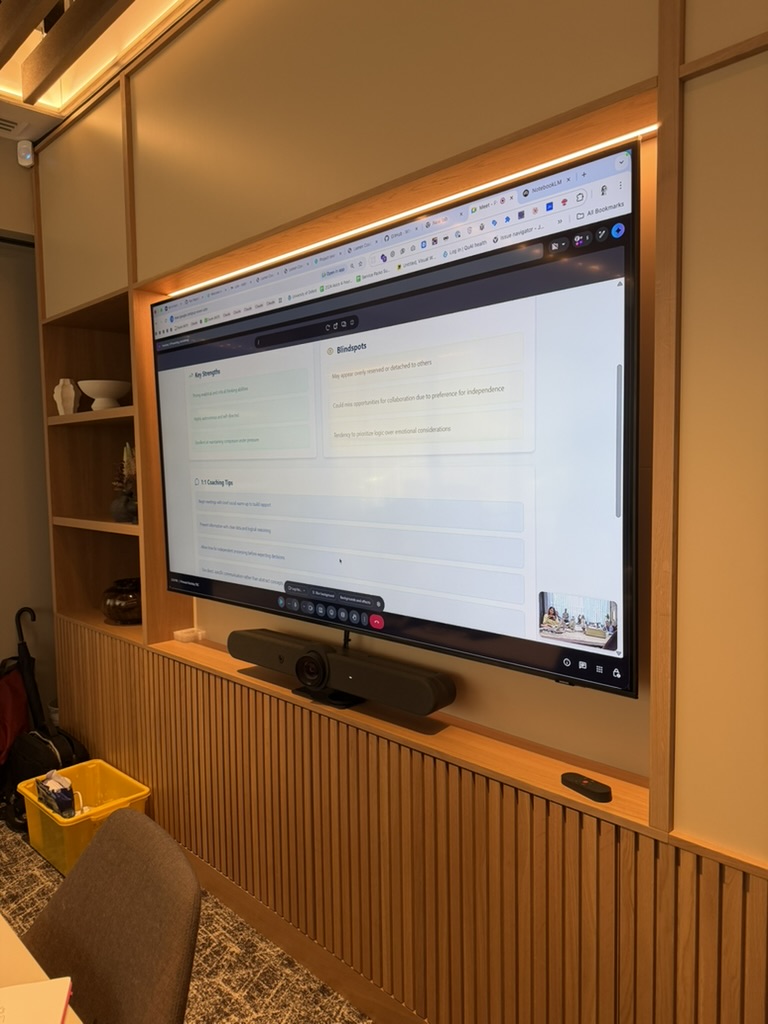
Three teams built a coaching platform that reads those diagnostic PDFs, pulls out strengths, blind spots and development areas, then turns them into a personal action plan with prompts that carry on across the eight-month journey.

  • A live dashboardJourney progress, a leadership profile with charts, and weekly reflection prompts, deployed as a working web app by the end of the day.
  • AI-written commitmentsCoaching nudges and commitments generated from the learner’s own diagnostic data rather than a template.
BoltGeminiClaudePDF analysisLeadership coaching
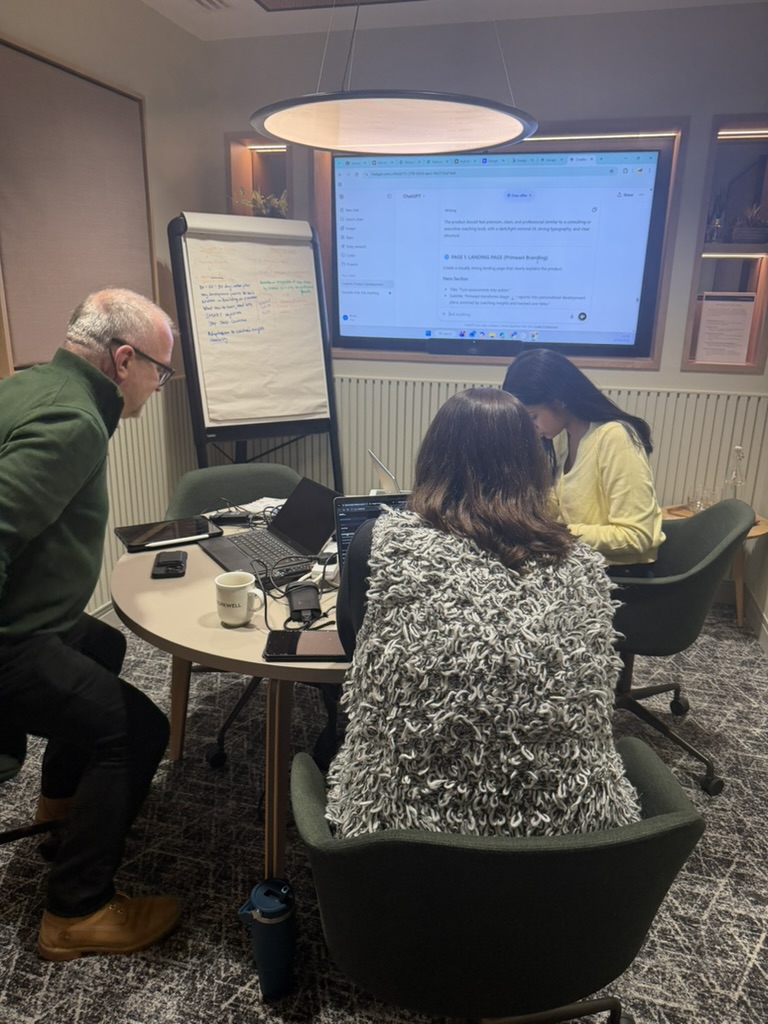
Primeast team planning their platform on a flipchart
Planning the journey
Primeast breakout session in progress
Breakout session
The finished coaching platform showing the eight-month journey and diagnostic insights
The finished platform, mapped across eight months

Audley Villages

Content tools for nineteen villages

On site at one of their villages · marketing and brand

Audley Villages runs nineteen retirement communities across the UK under the Audley and Mayfield brands. Keeping the copy consistent across all of them is a daily job, from event posters and social posts to property descriptions and a photo library nobody has had time to tag.

Small teams built the tools they wished they already had.

  • A brand tone checkerFlags phrasing that drifts off brand and suggests something better.
  • A property description generatorTurns floor plans and specifications into a usable listing.
  • An image tagging toolWorks through the untagged photo library so marketing can actually find things.

Another team generated village event material, including an illustrated mascot that stole the show at the demos.

BoltChatGPTLovableBrand consistencyContent generationImage tagging
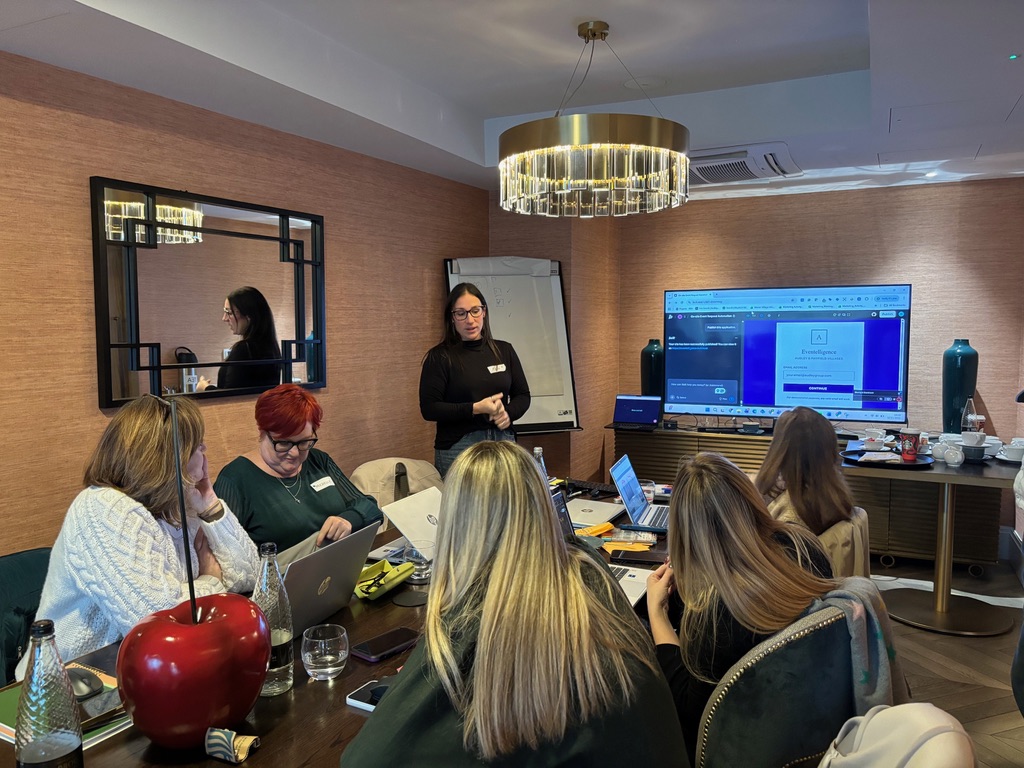
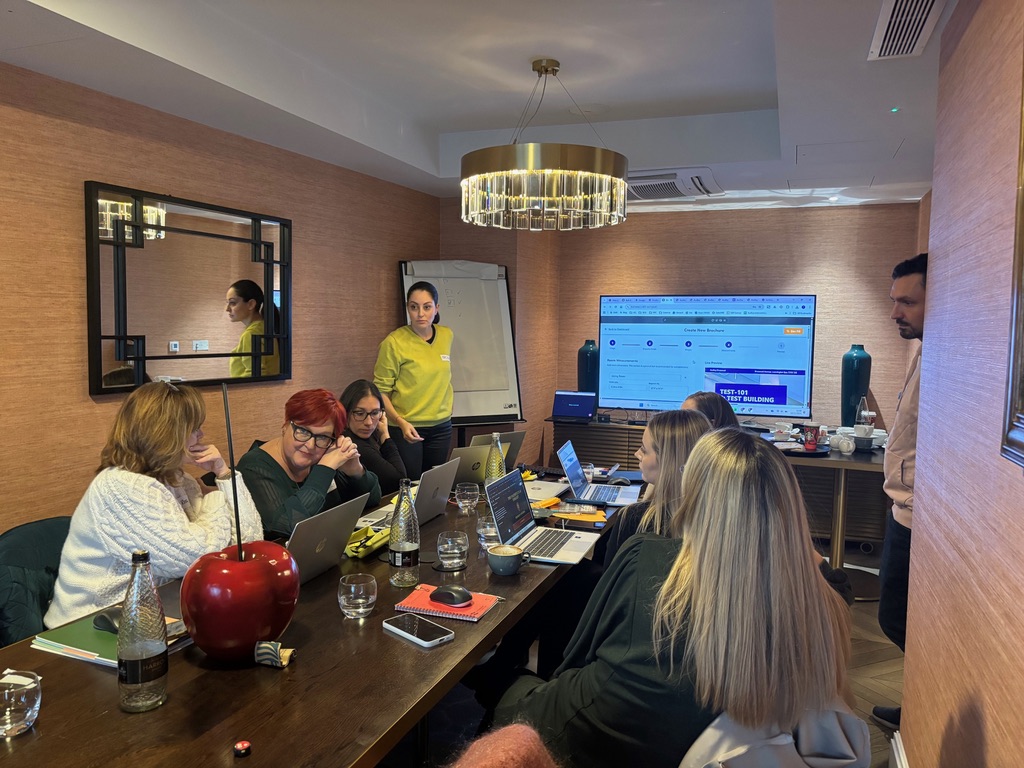
Audley Villages team building during the workshop
Getting hands on
Audley Villages team presenting their tool
Demo time
Audley Villages participants working together on a prototype
Two hours from idea to interface

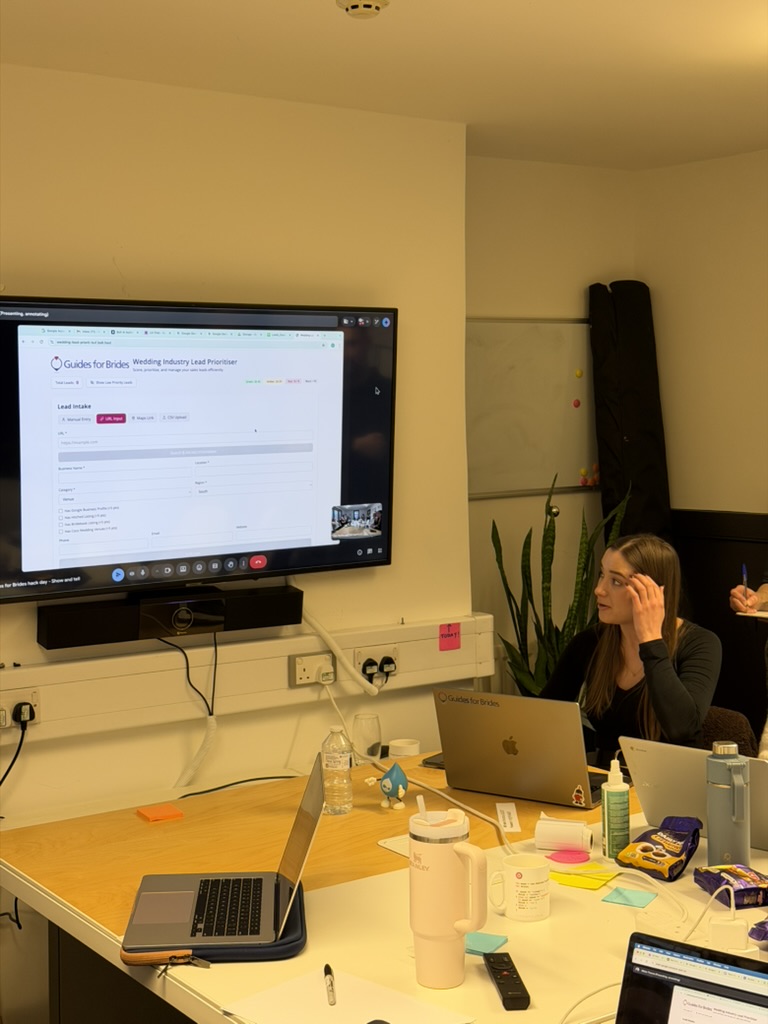
Guides for Brides

Smarter events and sharper leads

Several teams · events, sales and PR

Guides for Brides is the UK’s leading wedding directory and awards platform. Their teams picked three different problems and built for all of them.

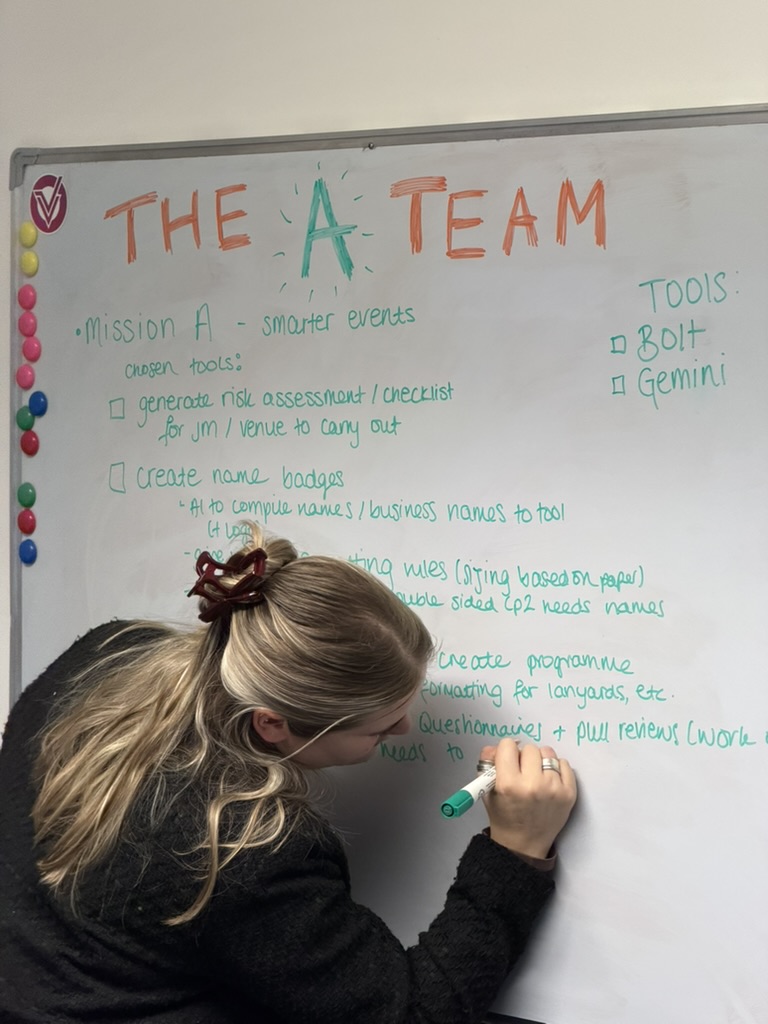
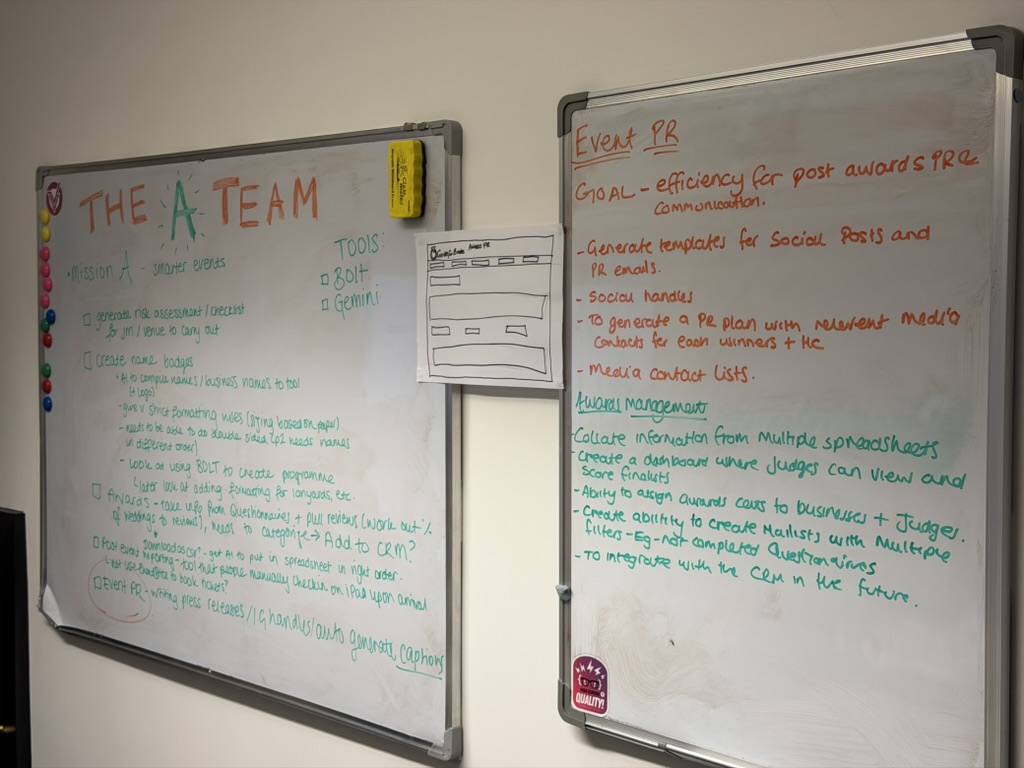
  • A smarter events suiteVenue risk assessments, name badges generated from the attendee list, event programmes, and automatic post-event questionnaires.
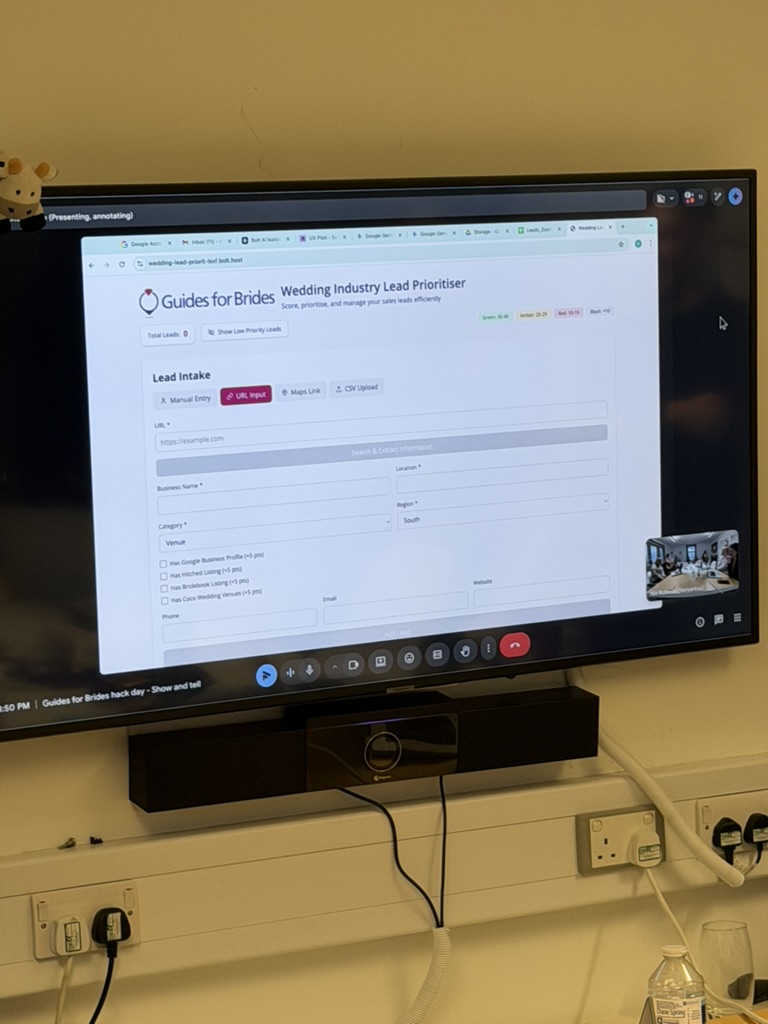
  • A lead prioritiserScores and ranks sales leads from URLs, Google Maps and CSV uploads, checking business profiles and directory listings to decide who to call first.
  • PR on tapSocial posts, press releases and media contact lists for award winners.
BoltGeminiLead scoringEvent managementPR automation
Guides for Brides team planning on a whiteboard
The plan, before the prompts
Guides for Brides team building their tools
Building the tools
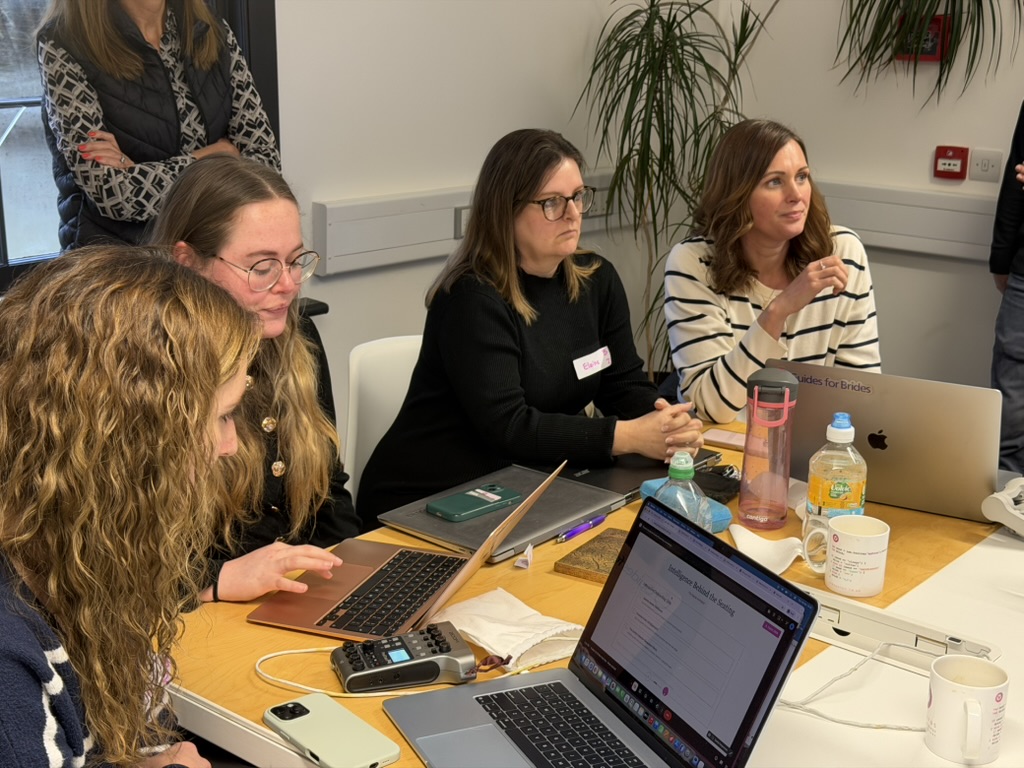
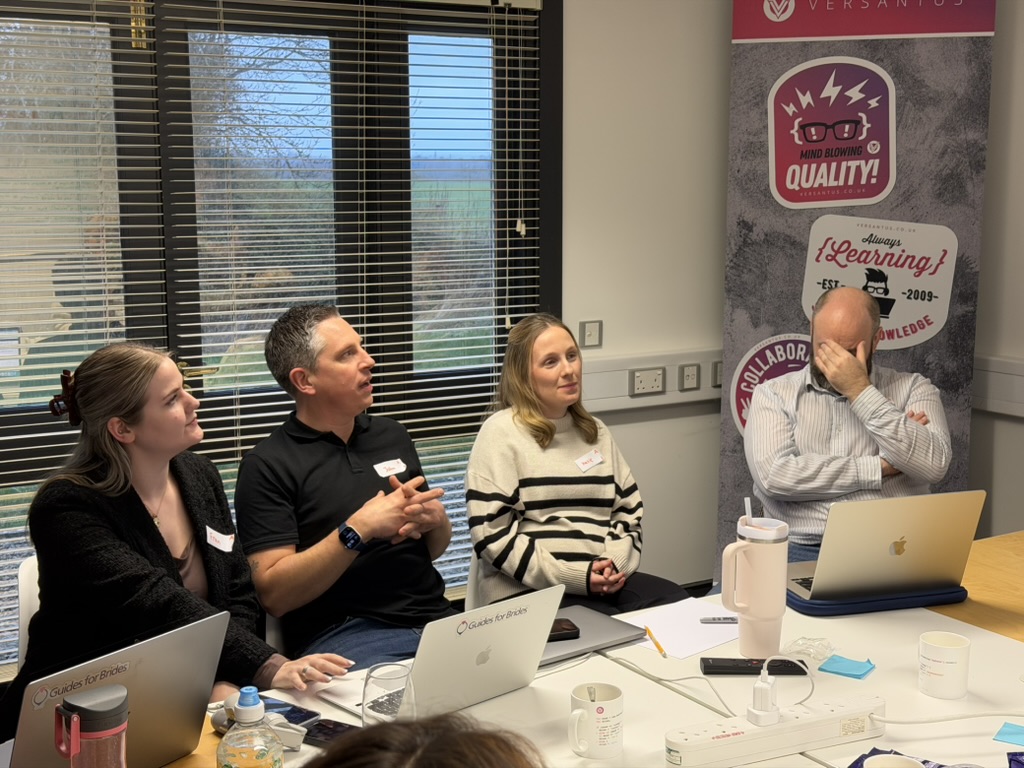
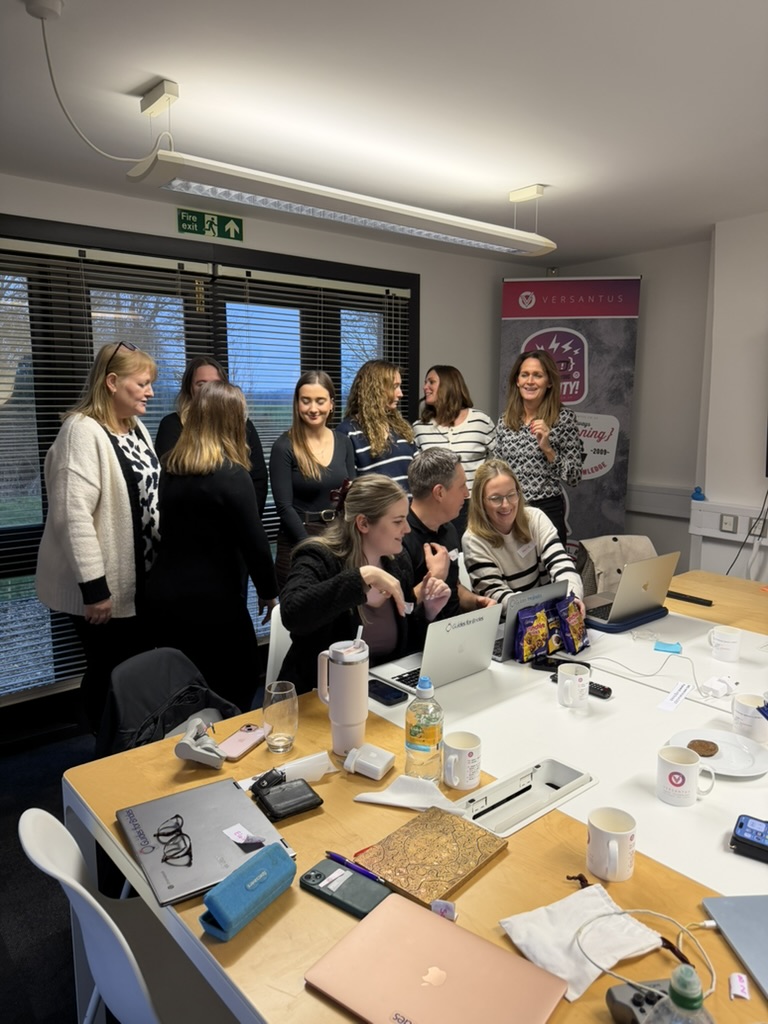
Guides for Brides team comparing notes between builds
Comparing notes between builds

Photos

Scenes from the last four hack days

Click any photo to see it full size.

Feedback

What people said afterwards

We survey everyone a few days later and ask how likely they are to recommend the day to a colleague. The most recent group gave it an average of 9 out of 10.

Got so much out of the day, really enjoyed exploring how we can make Meech better and also seeing the benefit of AI and how we can embrace it in our daily work. Not to replace, but to enhance the service we give.

Greg Thomlinson
Import, Export and CRM Coordinator, Meech International
10 / 10

Most of the people didn’t really know what to expect and were a little apprehensive. They are all commenting now on how much they learnt and what they can do for the future, so it sounds like it was a complete success.

Iain Cameron
Meech International

It was informal and engaging. Although it was just one day I felt like I got a lot out of it, and Nik and Andy were extremely helpful!

Anna Tanigaki
Marketing Assistant, Meech International
10 / 10

I found the AI hack day valuable and engaging!

Katy Peach
Marketing Executive, Meech International
9 / 10

The day was well structured, engaging and really useful. Learned about useful AI tools, got to put them into practice and create something useful.

Elena Ciccotti
Hack day participant

You definitely taught an old(ish) dog new tricks which will be put into use within the everyday workplace. Their wealth of knowledge was extensive and I certainly left with oodles more confidence than I arrived with.

Neets
Patient Choice

A really valuable day. It was great to step away from the day-to-day and think more broadly about how we approach digital solutions and problem-solving. We all came away with fresh perspectives and lots of ideas, without feeling overwhelmed.

Patient Choice participant
Post-day survey

The day was inspiring, educational, and also played a role in team building. A thoroughly worthwhile day away from ‘business as usual’.

Audley Villages participant
Post-day survey

Friendly and welcoming team. Created a new supporting project within a few hours.

Sophie Sibbald
Hack day participant

After the day

Where a prototype stops

The skills from a hack day go a long way on their own. Knowing where they run out matters just as much, so we finish by being straight about it.

What your team can do next

  • Test whether an idea is worth having
  • Build a working prototype to show people
  • Iterate on it and try it out on colleagues
  • Make it look like it belongs to you
  • Put it online for others to use
  • Keep going on their own account

Where we pick it up

  • Connecting it to your real systems and data
  • Security and protecting personal information
  • Accounts, permissions and payments
  • Accessibility and information architecture
  • Production hosting and maintenance
  • Everything that happens after launch

What happens next

From a working toy to something you run on

A hack day proves the appetite. Your team built something real in an afternoon and enjoyed it enough to want more. Crossing from that to a tool the business depends on is the part we help with, and there are four honest ways to go about it.

01 Stop here

Leave it as a prototype

Sometimes the learning was the point. Your team has seen what these tools can do and they will work differently on Monday, whether or not the prototype ever goes live. That is a good day’s work and we will not push you past it.

02 With a safety net

Build it yourselves

You want to keep going in-house. Your team carries the build and ours checks the parts that are easy to get wrong: quality, security, accessibility and compliance. You find out what needs fixing before real customers arrive, not after.

03 Built for you

Hand it to our experts

You want it built once and built properly. The prototype becomes the brief, we take it through to production, connect it to your real systems and look after it once it is live.

04 Grow your own

Train the champion

Some organisations would rather grow the skill inside the building. We take your brightest builders from the day and teach them everything we know, so the next idea gets prototyped without waiting for us.

Want to run one with your team?

Tell us who will be in the room and what frustrates them most. We will design the day around it.

Book your hack day